

In an industry built on speed and experimentation, dropshipping has always had one persistent flaw: too many decisions, not enough clarity.
From choosing the right product to setting a profitable price, from estimating ad performance to calculating actual returns, most sellers still rely on fragmented tools—or worse, intuition.
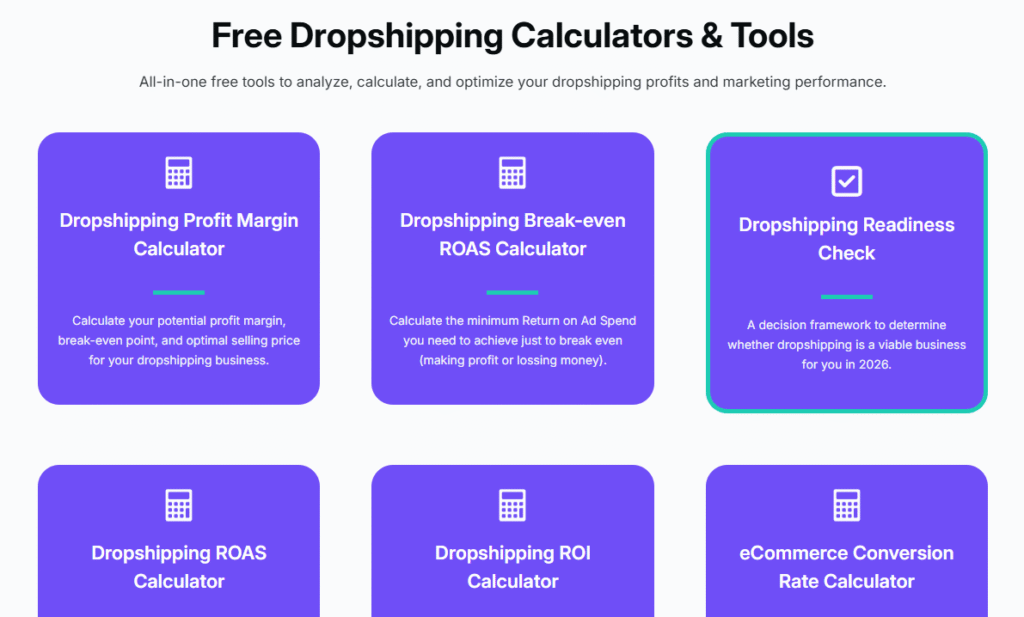
Ship To The Moon launchs a full-stack dropshipping decision toolkit, aiming to bring structure and data into every stage of the selling process.
A System, Not Just Tools
Rather than releasing isolated calculators, Ship To The Moon’s new toolkit is designed as a connected decision system—guiding sellers from initial readiness all the way to profitability analysis.
It starts with a simple but often overlooked question: Are you actually ready to run a dropshipping business?
The Dropshipping Readiness – Executive Diagnostic
👉 https://www.shiptothemoon.com/tools/dropshipping-readiness-check/
offers a quick evaluation framework, helping users identify gaps in strategy, budget, or operational setup before spending on ads or inventory.
From Product Validation to Pricing Logic
Once readiness is established, the next challenge is product selection—a stage where many stores fail before they even begin scaling.
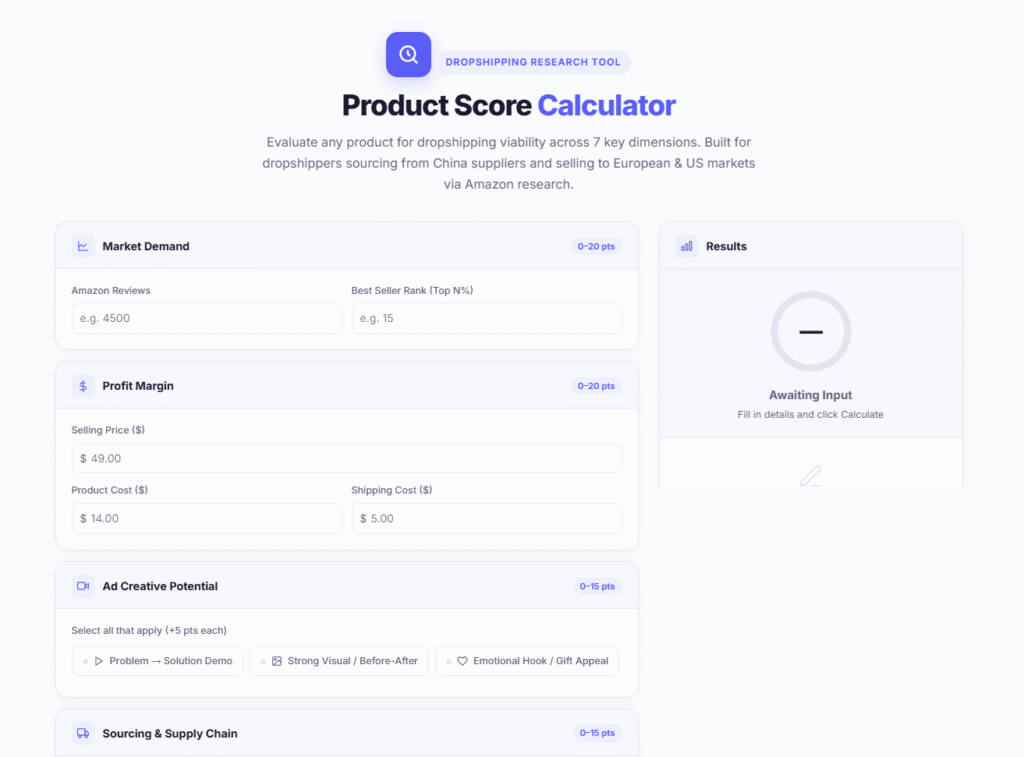
Ship To The Moon addresses this with two scoring tools:
- Product Score Calculator
👉 https://www.shiptothemoon.com/tools/dropshipping-product-score-calculator/ - Toy Product Score Calculator
👉 https://www.shiptothemoon.com/tools/toy-product-score-calculator/
These tools help quantify what is often subjective—market demand, competition intensity, and potential profitability—turning product research into a repeatable process.
Pricing, another common blind spot, is handled through the eCommerce Selling Price Calculator
👉 https://www.shiptothemoon.com/tools/selling-price-calculator/
Instead of guessing margins, sellers can model costs, fees, and target profit levels before launching campaigns.
Making Ads Measurable
Advertising has always been the most volatile part of dropshipping. A single miscalculation in ROAS (Return on Ad Spend) can quickly erase margins.
To address this, the toolkit includes:
- Dropshipping ROAS Calculator
👉 https://www.shiptothemoon.com/tools/dropshipping-roas-calculator/ - Dropshipping Break-even ROAS Calculator
👉 https://www.shiptothemoon.com/tools/dropshipping-break-even-roas-calculator/
Together, these tools allow sellers to define exactly how their campaigns need to perform—not just what they hope to achieve.
In parallel, the eCommerce Conversion Rate Calculator
👉 https://www.shiptothemoon.com/tools/conversion-rate-calculator/
adds another layer of realism by connecting traffic performance to actual revenue outcomes.
Closing the Loop: Profit and ROI
At the final stage, the focus shifts from metrics to money.
The Dropshipping Profit Margin Calculator
👉 https://www.shiptothemoon.com/tools/dropshipping-profit-margin-calculator/
and the Dropshipping ROI Calculator
👉 https://www.shiptothemoon.com/tools/dropshipping-roi-calculator/
bring everything together—helping sellers understand whether their business is not just growing, but truly profitable.
This end-to-end visibility is what sets the toolkit apart. Instead of isolated insights, users can follow a continuous path:
Readiness → Product → Pricing → Conversion → ROAS → ROI
A Shift Toward Decision Infrastructure
The launch reflects a broader shift in the dropshipping space. As competition increases and ad costs rise, success is becoming less about speed—and more about decision quality.
Tools like these don’t replace execution. But they do remove uncertainty.
For newer sellers, that may mean avoiding costly early mistakes. For experienced operators, it offers a way to standardize and scale decision-making across products and campaigns.
Either way, the message is clear: in 2026, guessing is no longer a viable strategy.
FAQ
-
What is a good profit margin for dropshipping?
Most dropshipping stores aim for a 15%–30% profit margin, though this varies depending on niche, ad costs, and pricing strategy.
-
What is break-even ROAS in dropshipping?
Break-even ROAS is the minimum return on ad spend required to cover all costs. Anything above this point generates profit.
-
How do you validate a dropshipping product?
Product validation typically involves analyzing demand, competition, pricing potential, and audience fit—often using structured scoring tools.
-
Why do most dropshipping stores fail?
Common reasons include poor product selection, incorrect pricing, unrealistic ad expectations, and lack of financial planning.
-
Are free dropshipping calculators reliable?
Yes—if they are based on clear formulas and realistic inputs. They are especially useful for planning and scenario testing before launching campaigns.