

The days when dropshipping meant selling random trending products with thin margins are fading fast.
Today, many ecommerce entrepreneurs are looking for categories that offer recurring demand, stronger customer loyalty, and better long-term economics. That’s one reason vitamin gummies have become one of the fastest-growing segments in the U.S. wellness market.
Unlike impulse-buy products, supplements are often consumed daily. Customers reorder regularly, subscription programs are easier to build, and a successful brand can generate significantly higher lifetime value than a typical general dropshipping store.
However, vitamin gummies dropshipping comes with challenges that many sellers underestimate. Product quality, FDA compliance, fulfillment speed, and even summer temperatures can directly affect profitability.
If you’re considering entering the supplement niche, here’s what you actually need to know.
Is Vitamin Gummies Dropshipping Still Worth It?
The short answer is yes—but not for the reasons many people assume.
The global gummy supplement market continues to grow at a double-digit pace (a CAGR of 13.16% by 2034 according to the data from Fortune Business Insights), driven by changing consumer preferences and growing interest in preventive wellness. In the United States, gummies have evolved far beyond the children’s vitamin category.
Adults now represent the largest segment of gummy supplement consumers. Millennials and Gen Z buyers increasingly view supplements as part of their daily wellness routines rather than occasional health purchases. Convenience matters. Taste matters. Consistency matters.
This shift is often described as “pill fatigue.” Many consumers simply prefer taking a flavored gummy over swallowing traditional capsules or tablets every day.
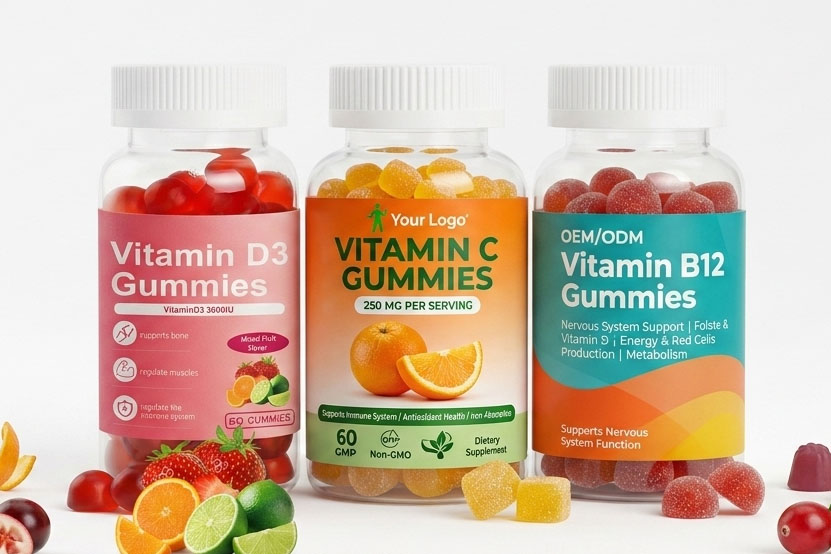
At the same time, common micronutrient deficiencies continue to support demand for products such as vitamin D, vitamin C, and B-complex supplements. Rather than chasing complicated formulations, many successful brands build around simple, clearly understood health goals.
For dropshippers, this creates an attractive combination of recurring demand and brand-building potential.
What Are the Best Vitamin Gummies Niches for Dropshipping?
One of the biggest mistakes new sellers make is trying to sell every supplement category at once.
Successful wellness brands usually start with one customer problem and become known for solving it.
The following niches continue to show strong demand:
| Niche | Target Customer | Primary Positioning |
|---|---|---|
| Ashwagandha Gummies | Professionals and entrepreneurs | Daily stress support |
| Collagen Gummies | Beauty-focused consumers | Hair, skin, and nail support |
| Apple Cider Vinegar Gummies | Weight-management audience | Digestive wellness |
| Vitamin D3 + K2 Gummies | Indoor workers and older adults | Bone health support |
| Probiotic Gummies | Gut-health consumers | Digestive balance |
| Sleep Gummies | Travelers and shift workers | Healthy sleep support |
Among these categories, sleep, stress support, beauty, and gut health often perform particularly well because they connect directly to everyday lifestyle concerns.
For example, a collagen gummy brand can naturally expand into beauty-focused bundles. A sleep-support brand can introduce magnesium products, sleep masks, and evening wellness routines.
The goal is not to sell more supplements. The goal is to own a specific wellness conversation.
Private Label vs Traditional Supplement Dropshipping
Not all supplement dropshipping models are the same.
Traditional dropshipping usually involves selling products that dozens—or even hundreds—of other stores can access from the same supplier. As a result, competition often comes down to price.
Margins become compressed.
Customer loyalty remains weak.
Brand value is almost nonexistent.
Private label supplement dropshipping changes that equation.
| Factor | Generic Products | Private Label Gummies |
|---|---|---|
| Brand Ownership | No | Yes |
| Customer Loyalty | Low | High |
| Margin Potential | Limited | Strong |
| Subscription Opportunities | Limited | High |
| Long-Term Business Value | Low | Significant |
With private labeling, the product may be manufactured by a supplier, but customers interact with your brand, your packaging, and your marketing.
This distinction matters.
Consumers rarely remember where a supplement was manufactured. They remember the brand that helped them achieve a desired outcome.
For sellers looking to build a long-term business rather than chase short-term product trends, private label vitamin gummies often provide a more sustainable path.
Choosing a Vitamin Gummies Supplier: What Actually Matters
Many sellers focus entirely on product cost when evaluating suppliers.
That is usually a mistake.
A supplier that saves you a few dollars per order but creates shipping delays, compliance problems, or customer complaints can quickly become expensive.
Here is a simplified comparison of common supplement fulfillment options:
| Supplier | Private Label | MOQ | Best For |
|---|---|---|---|
| Supliful | Yes | None | New supplement brands |
| Syncee | Partial | None | Multi-category stores |
| Spocket | Limited | None | Product testing |
| AppScenic | Limited | None | Automation-focused sellers |
| Ship To The Moon | Yes | Flexible | Brand-focused ecommerce sellers |
When evaluating a vitamin gummies supplier, prioritize the following:
- FDA-compliant manufacturing facilities
- Reliable U.S. fulfillment capabilities
- Private label support
- Product documentation and traceability
- Fast delivery times
- Consistent inventory availability
Fast shipping is not just a logistics issue. It directly influences reviews, subscription retention, refund rates, and customer trust.
In many cases, fulfillment quality becomes a competitive advantage that customers never see—but always experience.
The Biggest Problem Nobody Talks About: Gummies Melt
Most supplement articles focus on marketing.
Very few discuss what happens after an order is placed.
Vitamin gummies are heat-sensitive products. During summer months, especially in states such as Texas, Florida, Arizona, and Nevada, temperature exposure can create serious fulfillment challenges.
Customers do not care why a gummy melted.
They only know they received a product that looks damaged.
Understanding gummy formulations can help sellers reduce these issues.
Pectin vs Gelatin
| Feature | Pectin | Gelatin |
|---|---|---|
| Plant-Based | Yes | No |
| Vegan Friendly | Yes | No |
| Heat Resistance | Higher | Lower |
| Summer Shipping Performance | Better | Moderate |
Pectin-based gummies generally tolerate higher temperatures better than traditional gelatin gummies, making them a popular choice for modern supplement brands.
However, formulation alone is not enough.
Professional suppliers typically combine several protective measures:
- Moisture-control packaging
- Food-grade desiccants
- UV-resistant containers
- Sealed bottle liners
- Temperature-aware fulfillment processes
For brands selling nationwide, especially during summer, logistics planning can be just as important as product selection.
FDA and FTC Compliance: The Rules Every Seller Must Know
Many supplement businesses run into trouble not because of their products, but because of their claims.
In the United States, supplement brands operate under a dual regulatory environment involving both the FDA and the FTC.
The FDA primarily regulates product labeling.
The FTC focuses on advertising and marketing claims.
FDA Label Requirements
At a minimum, supplement labels should include:
- Product identity
- Net quantity
- Supplement Facts panel
- Ingredient list
- Business name and address
Missing information can create compliance issues and lead to marketplace restrictions.
Claims That Can Get Your Store Into Trouble
Perhaps the most common mistake among new sellers is confusing structure-function claims with disease claims.
| Compliant Claim | Non-Compliant Claim |
|---|---|
| Supports healthy sleep | Treats insomnia |
| Supports immune health | Prevents disease |
| Helps manage everyday stress | Cures anxiety |
| Supports digestive health | Treats IBS |
The difference may seem subtle, but regulators treat these categories very differently.
Supplements can support normal bodily functions.
They cannot be marketed as treatments or cures for medical conditions.
TikTok Shop and Influencer Marketing Risks
TikTok has become one of the most powerful customer acquisition channels for supplement brands.
It has also become one of the riskiest.
Common compliance mistakes include:
- Unsubstantiated health claims
- Before-and-after transformation content
- Missing sponsored-content disclosures
- Influencer testimonials that imply disease treatment
A useful rule is simple:
If a claim sounds like something a pharmaceutical company would need clinical trials to advertise, a supplement brand probably should not be making it.
Many supplement stores are not shut down because of the product itself—they are shut down because of the marketing.
How to Build a Sustainable Vitamin Gummies Brand
The strongest supplement brands are rarely built around ingredients.
They are built around customer outcomes.
Instead of creating a store that sells dozens of unrelated products, focus on a single wellness objective.
Examples include:
- Better sleep
- Daily stress management
- Beauty and healthy aging
- Gut health
- Immune support
Once customer trust is established, additional products become easier to introduce.
Bundling can also increase average order value.
| Core Product | Complementary Product |
|---|---|
| Collagen Gummies | Vitamin C Gummies |
| Ashwagandha Gummies | Sleep Gummies |
| Probiotic Gummies | Apple Cider Vinegar Gummies |
| Vitamin D3 + K2 Gummies | Immunity Gummies |
This approach not only increases revenue per order but also strengthens the overall customer experience.
Over time, fulfillment quality becomes part of the brand itself.
Fast shipping, consistent product quality, accurate inventory management, and reliable customer experiences all contribute to higher retention and stronger subscription performance.

Final Thoughts
The opportunity in vitamin gummies dropshipping is larger than the product category itself.
Consumers continue to invest in wellness. Demand for convenient supplement formats remains strong. And private label models make it easier than ever to launch a brand without carrying large amounts of inventory.
But long-term success requires more than finding a trending product.
The sellers who win in 2026 will be those who combine smart niche positioning, compliant marketing, reliable fulfillment, and strong brand building.
Whether you’re launching your first supplement store or expanding an existing wellness business, partnering with the right supplier can make the difference between a short-term product experiment and a scalable ecommerce brand.
Ship To The Moon helps merchants build vitamin gummies brands through private labeling, U.S.-focused fulfillment, and ecommerce-ready dropshipping solutions designed for long-term growth.