

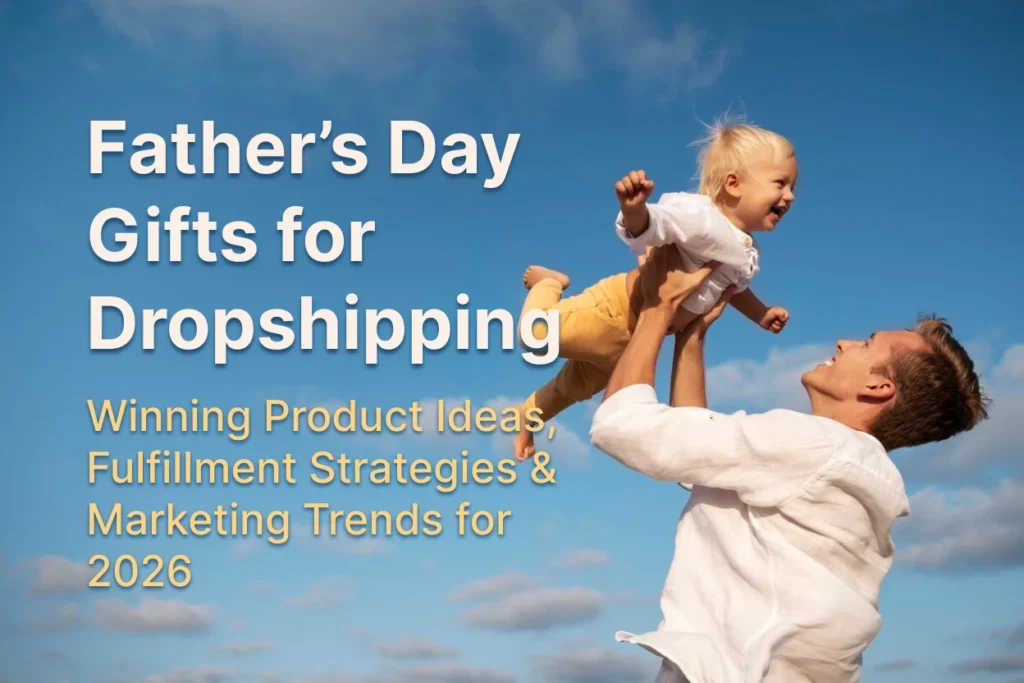
For a long time, Father’s Day sat in an awkward spot for ecommerce sellers.
Not as massive as Christmas. Not as emotionally explosive as Mother’s Day. Not predictable enough to justify months of inventory planning. A lot of stores treated it like a short-term promo event, pushed a few “Best Dad Ever” mugs, then moved on.
That’s changed.
Father’s Day has quietly become one of the most interesting seasonal opportunities in modern dropshipping — especially for sellers operating in the U.S. market. According to the National Retail Federation, Father’s Day spending reached a record $24 billion recently, continuing a multi-year growth trend that has significantly outpaced inflation. Over the past five years alone, overall spending has climbed by roughly 41%, while participation rates have remained consistently high. In other words, this is no longer a niche seasonal event sitting in the shadow of Christmas.
And honestly, you can see the shift directly inside ecommerce ads now.
Five years ago, most Father’s Day campaigns were heavily utility-first: wallets, toolkits, coffee mugs, generic “man gifts.”
Today, the products scaling hardest tend to feel more personal, more identity-driven, and much more social-media friendly. Personalized apparel. AI-generated family portraits. Recovery gadgets. Smart grilling accessories. Gifts designed around specific versions of fatherhood rather than “men in general.”
That shift matters because it lines up unusually well with how modern dropshipping works:
- fast-moving trend cycles
- emotional impulse purchases
- TikTok-driven product discovery
- personalization at scale
- U.S.-based fulfillment expectations
The other thing sellers still underestimate is how compressed the buying window is.
Unlike Christmas, Father’s Day shoppers procrastinate aggressively. Industry estimates suggest nearly 90% of Father’s Day purchases happen within the final month before the holiday, while roughly 30% land during the final week alone. That creates operational chaos — but also opportunity for stores capable of moving fast.
So instead of treating Father’s Day like a generic gift season, smart ecommerce brands increasingly treat it like a short-duration, high-intent conversion event.
And in 2026, the stores winning this category usually aren’t the cheapest ones.
They’re the ones that understand timing, emotional positioning, and fulfillment psychology better than everybody else.
The 2026 Father’s Day Market Isn’t Small Anymore
One of the biggest misconceptions newer dropshippers still have is assuming Father’s Day is a “secondary” ecommerce holiday.
The numbers don’t really support that anymore.
Participation rates continue hovering around 76% of U.S. consumers, while average planned spending is approaching the $200 range. More importantly, consumers aged 35–44 consistently spend the most — nearly $279 on average according to recent market research.
That age bracket matters more than people realize.
These buyers are usually part of what marketers call the “sandwich generation.” They’re raising children while also shopping for parents, spouses, stepfathers, mentors, or even grandfathers at the same time.
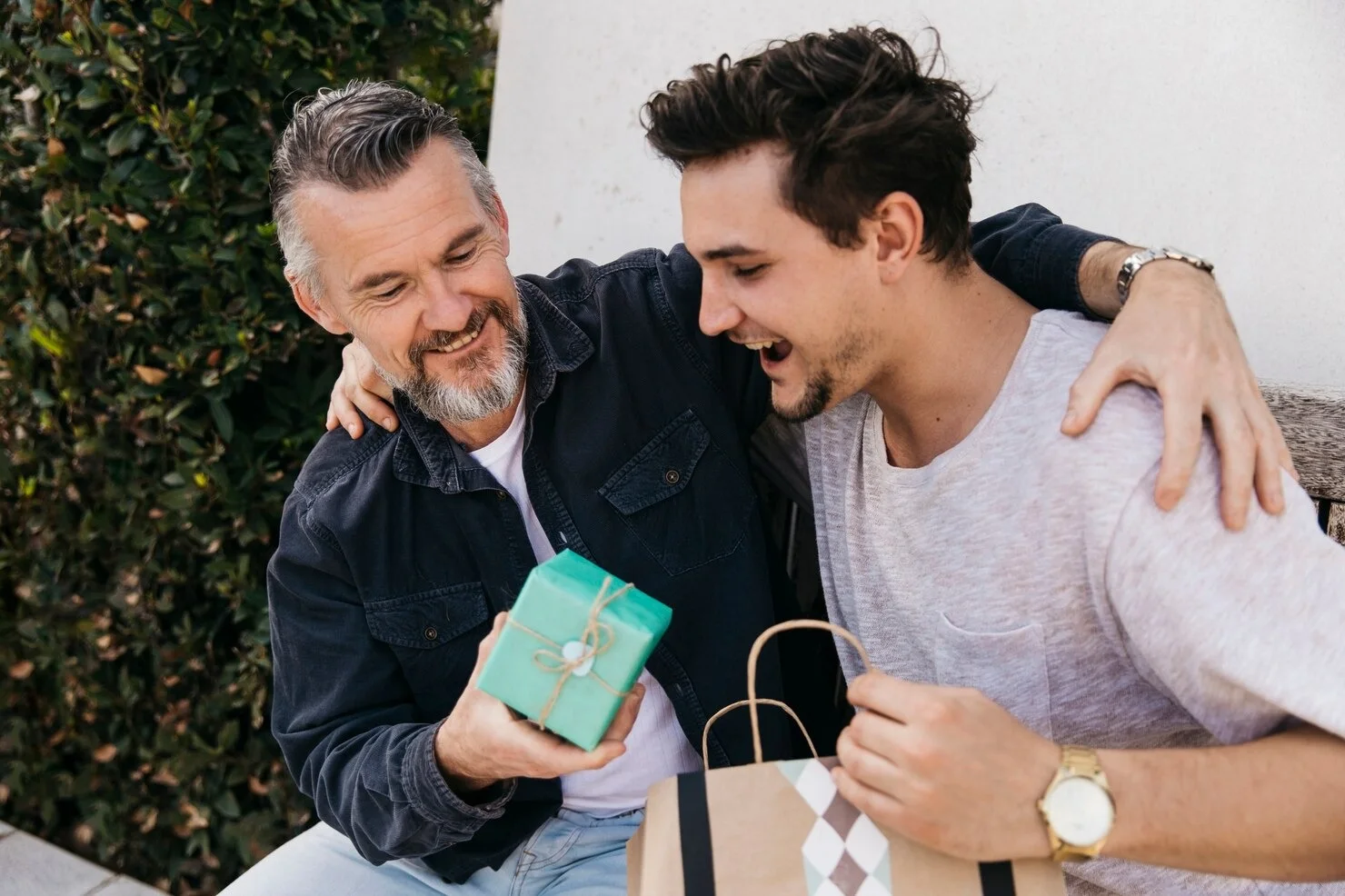
In practice, that changes buying behavior dramatically.
Someone buying a single novelty mug for their dad behaves very differently from someone shopping for:
- their husband’s first Father’s Day
- a retired father
- a father-in-law
- a grandfather
- and maybe a co-parent gift from young children
The cart value climbs quickly once gifting becomes multi-directional.
Operationally, this is one reason premium bundles perform unusually well during Father’s Day campaigns. Buyers in this demographic are often optimizing for emotional completeness rather than strict price efficiency.
The audience itself is broadening too.
While biological fathers still dominate gifting occasions, spending tied to husbands, sons, stepfathers, brothers, mentors, and father figures continues growing steadily. That subtle shift is changing how successful stores structure their marketing funnels.
And there’s another major change happening underneath the surface.
Consumers increasingly want gifts that feel specific.
Recent retail surveys show:
- 46% of shoppers actively look for gifts that feel “unique or different”
- 37% prioritize gifts capable of creating special memories
That single behavioral shift explains a huge amount of what’s happening across Father’s Day ecommerce right now.
People aren’t really buying “men’s products” anymore.
They’re buying recognition.
A grilling accessory isn’t just a grilling accessory. A custom garage sign isn’t really about the sign. A matching father-and-child hoodie set isn’t fundamentally about apparel.
It’s about saying: “This feels like him.”
That’s a very different kind of ecommerce psychology.
2026 Father’s Day Consumer Snapshot
| Metric | What It Actually Means for Sellers |
|---|---|
| $24B+ total spending | Father’s Day is now a major seasonal ecommerce event |
| 41% of purchases happen online | Ecommerce and mobile-first discovery dominate |
| 46% seek unique gifts | Personalization beats generic catalog products |
| 37% want memory-driven gifts | Emotional positioning increasingly matters |
| 30% purchase experiences | Products now need to feel tied to moments or rituals |
| 35–44 age group spends the most | Higher AOV opportunities through bundles and premium gifts |
Reference: NRF Father’s Day Data and Trends; MNTN Research Father’s Day 2026 Insights
What’s Actually Selling for Father’s Day in 2026
If you spend enough time inside winning TikTok ads, Meta creatives, and Shopify stores during Q2, patterns start appearing pretty fast.
The products performing best during Father’s Day usually share a few characteristics:
- immediately understandable
- emotionally framed
- visually demonstrable
- slightly personalized
- easy to react to on video
And increasingly, they need to feel specific.
Broad “gifts for men” stores are getting crowded. Specific dad archetypes convert much better.
Personalized Gifts Still Dominate
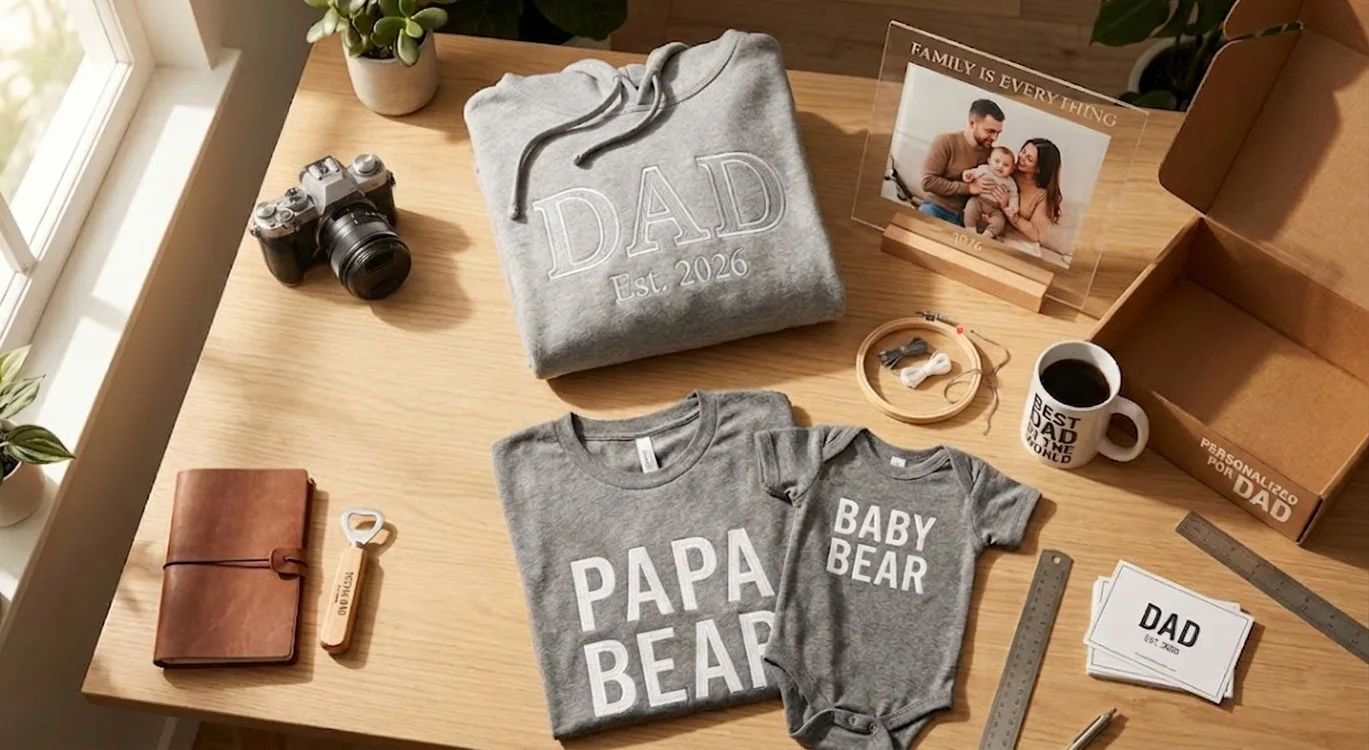
This category never really disappeared. It just evolved.
Basic print-on-demand slogans still exist, but the stronger-performing products now build around family identity and memory creation rather than simple humor.
Things like:
- embroidered “Dad Est. 2026” hoodies
- father-and-child matching sets
- custom acrylic family plaques
- AI-generated portrait artwork
- personalized garage or workshop signs
The AI portrait trend especially exploded because it combines two things ecommerce loves:
- high emotional value
- low production complexity
More importantly, it aligns perfectly with the broader consumer shift toward uniqueness and memory-building.
You can actually see this change directly inside TikTok creatives. The best-performing Father’s Day ads are often less about the product itself and more about the emotional reveal around it.
Acrylic plaques with stylized family illustrations work especially well because they’re:
- cheap to produce
- lightweight for shipping
- visually strong on video
- highly shareable on social media
And most importantly, they trigger reaction content.
That matters because Father’s Day has become heavily tied to UGC-style marketing. In many campaigns, real customer reaction videos outperform polished studio ads by a huge margin.
Messy authenticity converts.
Not polished perfection.
Practical Gadgets Are Still Huge — But Only If They’re Visually Interesting
This is where a lot of beginner sellers fail.
They choose products that are technically useful but terrible for short-form content.
A product can solve a real problem and still completely fail on TikTok because it doesn’t visually “do” anything.
The gadgets that consistently work usually have a satisfying demonstration component:
- handheld vacuum sealers
- magnetic gym bottle holders
- rotating spice racks
- smart posture correctors
- compact BBQ accessories
- cable organization gadgets
You’ll notice many of these products create an immediate before-and-after effect.
That’s not accidental.
Father’s Day shopping has become increasingly digital-first. With roughly 41% of purchases now happening online, products are competing inside highly compressed mobile attention environments.
The viewer often gives you less than two seconds.
If the product transformation is instantly obvious, engagement rises sharply.
Vacuum sealers are a perfect example. Watching loose packaging collapse into a tight seal scratches the same psychological itch as cleaning videos or organization content. People keep watching because the transformation itself feels satisfying.
And when something becomes satisfying to watch, CPA usually improves too.
Physical Products Now Need to Feel Like Part of an Experience
One of the more interesting market shifts is the rise of experience-driven gifting.
Around 30% of Father’s Day shoppers now spend on some form of experience gift — concerts, sporting events, travel activities, restaurant outings, and similar purchases.
That trend matters even for physical-product sellers.
Because increasingly, products themselves need to feel connected to a larger emotional moment.
You can see it everywhere:
- BBQ accessories marketed around family cookouts
- golf products framed around weekend bonding
- workshop decor tied to nostalgia
- recovery products positioned as “finally helping dad relax”
The product itself often matters less than the scenario surrounding it.
Experienced dropshippers quietly understand this already.
They’re not really selling objects.
They’re selling rituals, reactions, and identity signals.
Wellness for Men Quietly Became a Massive Category
This is probably one of the more underrated Father’s Day trends right now.
Men’s wellness products used to skew heavily toward grooming. Now the category is shifting toward:
- recovery
- stress reduction
- sleep quality
- energy optimization
- fatigue management
That positioning works much better for Father’s Day audiences.
Products gaining traction include:
- massage guns
- Bluetooth sleep masks
- white-noise sleep headphones
- red light therapy devices
- posture support tools
- recovery-focused fitness accessories
What’s interesting is that this trend reflects a broader cultural shift.
Post-pandemic male consumers have become much more comfortable buying products associated with recovery and wellness — especially when framed around performance or stress relief rather than beauty.
The strongest ads rarely position these products as vanity purchases.
Instead, they focus on:
- better sleep
- reduced fatigue
- stress recovery
- post-work relaxation
- “dad finally taking care of himself”
That framing converts much better.
The “Retired Dad” Market Is Bigger Than Most Sellers Think
A surprising number of dropshippers still ignore older demographics because they assume younger audiences dominate ecommerce.
But Father’s Day behaves differently.
Search intent around retired fathers, grandfathers, and older male hobbies keeps growing every year.
And interestingly, these buyers often generate:
- lower return rates
- fewer impulsive complaints
- higher emotional attachment to purchases
- less price sensitivity for meaningful gifts
Products doing well in this segment include:
- arthritis-friendly kitchen tools
- magnifier floor lamps
- retro sports memorabilia
- nostalgic garage decor
- classic radio-style Bluetooth speakers
- gardening and workshop accessories
The nostalgia angle works especially well.
A lot of high-performing creatives aren’t really selling functionality at all. They’re selling familiarity and memory.
That emotional familiarity tends to outperform “cool tech” for older audiences.
Best Father’s Day Dropshipping Niches With Strong Margins
Not every Father’s Day niche works equally well for dropshipping.
Some categories generate traffic but terrible margins. Others convert nicely but create refund headaches because fulfillment timing collapses during the final week.
The better niches usually combine:
- emotional positioning
- lightweight fulfillment
- simple creative angles
- decent AOV potential
- low sizing complexity
High-Converting Father’s Day Niches in 2026
| Niche | Why It Works | Strongest Content Angle |
|---|---|---|
| AI portrait plaques | Emotional reveal + personalization | Family reaction videos |
| BBQ accessories | Summer ritual behavior | Backyard family moments |
| Recovery & sleep products | Stress relief positioning | “Dad finally relaxed” |
| Gifts for first-time dads | Milestone-driven buying | Newborn/family emotion |
| Gifts for retired dads | Nostalgia + practicality | Sentimental storytelling |
| Garage/workshop decor | Identity signaling | “This feels like dad” |
| Matching family apparel | Highly shareable UGC | Family reveal moments |
Personalized Family Gifts
Still one of the safest seasonal niches.
Why it works:
- emotional urgency
- high perceived value
- easy upsells
- strong UGC potential
Best formats:
- embroidered apparel
- acrylic plaques
- framed artwork
- engraved accessories
This category also benefits heavily from bundle logic. A personalized hoodie plus matching mug usually outperforms either product sold alone.
BBQ & Outdoor Cooking
Classic Father’s Day category — but it still scales because the content angle remains reliable.
Good products:
- spice organizers
- grill accessory kits
- digital thermometers
- magnetic seasoning racks
- portable smokers
The best-performing creatives usually focus less on cooking itself and more on the social atmosphere around cooking: family gatherings, backyard weekends, summer rituals.
Recovery & Sleep Products
Very strong for short-form video ads right now.
Partly because:
- stress is universally relatable
- demonstrations are easy
- benefits feel immediate
This category overlaps nicely with fitness audiences and older demographics simultaneously.
Gifts for First-Time Dads
One of the most emotional subcategories in the entire Father’s Day market.
Strong products:
- newborn matching apparel
- baby handprint kits
- “Dad Est.” clothing
- custom family illustrations
The conversion driver here isn’t utility.
It’s milestone identity.
People remember first Father’s Day gifts for years, which makes buyers significantly less price-sensitive than usual.
Fast Fulfillment Is the Real Competitive Advantage
A lot of ecommerce advice still focuses almost entirely on product selection.
But during Father’s Day season, fulfillment quality often matters more than the product itself.
Because shoppers procrastinate.
Every year, stores see the same pattern:
traffic spikes hard during the final 10 days before Father’s Day, then panic buying starts.
And panic buyers behave differently.
They care less about saving $4.
They care about:
“Will this actually arrive on time?”
That single question changes conversion behavior dramatically.
A mediocre product with reliable 3-day shipping will often outperform a better product with uncertain delivery tracking during Father’s Day week.
U.S. Warehousing Matters More Than Ever
This is where many old-school AliExpress-style workflows break down completely.
The old “2–3 week shipping” model simply doesn’t survive well in modern seasonal ecommerce anymore, especially in the U.S. market.
Consumers increasingly expect:
- reliable tracking
- realistic delivery estimates
- fast domestic shipping
- low-friction returns
And emotionally, Father’s Day timing is unforgiving.
Miss Christmas delivery and the gift can still feel relevant later.
Miss Father’s Day delivery and the emotional moment disappears.
That’s why more serious ecommerce operations now prioritize:
- U.S.-based inventory
- local fulfillment
- POD production coordination
- automated order routing
It’s less glamorous than product research, but operational reliability quietly determines who survives Q2 profitably.
Shipping Deadlines Matter More Than Most Sellers Expect
Another thing newer sellers often overlook: logistics bottlenecks compound during seasonal events.
For 2026 specifically, Juneteenth lands extremely close to Father’s Day weekend, which can impact USPS operations and delivery timelines.
That means sellers relying on last-minute international fulfillment are taking real risk.
Experienced stores usually start adjusting strategy weeks earlier:
- pushing personalized products sooner
- switching ad budgets toward fast-ship SKUs late in the cycle
- simplifying bundles near cutoff dates
- prioritizing domestic inventory
Operationally, the best seasonal stores behave almost like media companies backed by logistics systems.
Creative drives attention.
Fulfillment protects profitability.
Automation Becomes Critical During Seasonal Spikes
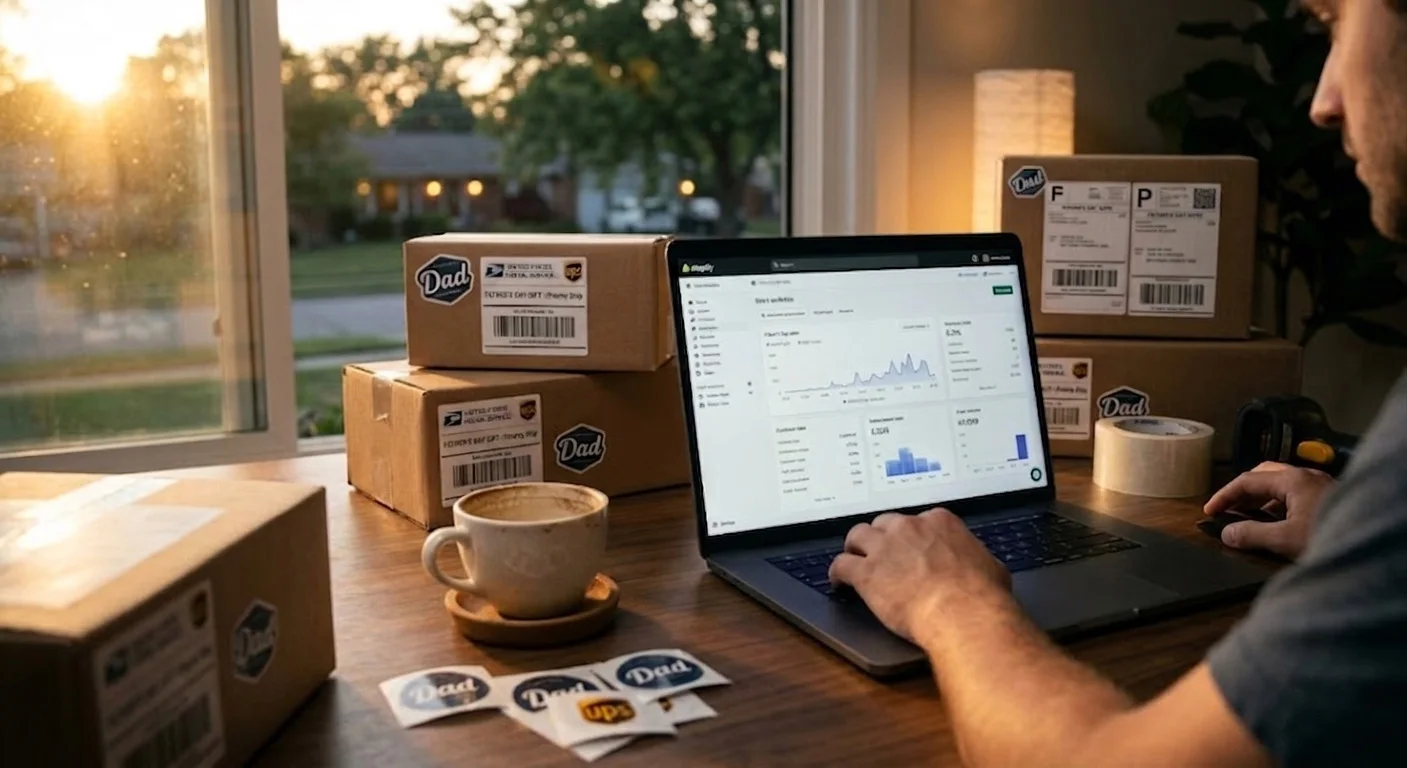
Father’s Day traffic bursts can create operational chaos surprisingly fast.
Inventory sync failures, overselling, delayed tracking uploads — all of those problems become magnified during compressed seasonal windows.
That’s why more scaling stores now build around:
- real-time inventory sync
- automated fulfillment flows
- branded packaging inserts
- warehouse routing logic
- stock buffers
Even something simple like hiding the final 20–30% of available inventory can prevent overselling disasters during aggressive ad spikes.
And from a branding perspective, small touches matter more than people think during gift holidays.
A clean insert card or branded packaging experience often creates disproportionately positive reactions because customers already associate the purchase with emotion.
For sellers scaling Father’s Day campaigns with U.S.-focused fulfillment, POD support, and seasonal product sourcing, platforms like Ship To The Moon are increasingly positioned around exactly this operational layer — faster fulfillment, branded ecommerce workflows, and flexible product sourcing built for modern dropshipping stores.
The Marketing Angles That Are Actually Working in 2026
Father’s Day marketing has become far more emotional over the past few years.
Not softer.
Just more human.
The ads scaling now usually feel less like commercials and more like moments.
TikTok Hooks Got Much Faster
The first few seconds matter brutally now.
A slow intro kills reach almost immediately.
The strongest-performing hooks tend to do one of three things:
- create curiosity
- trigger emotion
- challenge expectations
Examples:
- “Stop buying boring Father’s Day gifts.”
- “I finally found a gift my retired dad actually uses.”
- “Three gifts under $50 dads surprisingly love.”
Specificity helps enormously.
Generic claims blur together.
Specific scenarios feel believable.
Emotional Reveal Content Still Outperforms Polished Ads
This trend keeps repeating itself across almost every Father’s Day campaign cycle.
Highly polished commercials often lose to:
- phone-shot reactions
- family moments
- imperfect unboxings
- genuine surprise footage
Why?
Because the emotional payoff is the product.
People aren’t evaluating technical features as much as imagining the reaction they want to create.
That’s why “gift reveal” creatives work so well here.
You’re effectively selling anticipation.
Bundles Quietly Increase AOV
A lot of stores still underuse bundling during Father’s Day.
Which is strange, because the holiday naturally supports it.
And with the highest-spending demographic already purchasing for multiple father figures simultaneously, bundled offers often feel more efficient rather than more expensive.
Good combinations:
- custom hoodie + mug
- grilling set + apron
- recovery bundle + sleep mask
- workshop sign + LED lamp
Bundles work especially well because buyers are often trying to create a “complete” feeling gift experience quickly.
And psychologically, bundles reduce decision fatigue.
The Brands Winning Father’s Day Feel More Human
One interesting shift in 2026 ecommerce is that sensitivity itself has become part of good marketing.
Father’s Day can be emotionally complicated for a lot of people:
- grief
- estranged relationships
- infertility
- family conflict
Some brands now allow subscribers to opt out of Father’s Day campaigns entirely.
That may sound small, but it actually signals emotional intelligence — and consumers notice.
The broader trend is clear:
the strongest brands increasingly feel aware of real life instead of aggressively transactional.
Inclusivity matters too.
Not every customer is shopping for a biological father. Some are shopping for mentors, stepfathers, grandfathers, partners, or father figures.
The brands that acknowledge those realities tend to build stronger emotional trust over time.
And trust compounds unusually well in seasonal ecommerce.
Final Thoughts
The stores winning Father’s Day in 2026 usually aren’t doing one magical thing differently.
They’re aligning several realities at the same time:
- emotionally specific products
- fast fulfillment
- strong short-form creative
- personalization
- operational reliability
- audience-aware messaging
Underneath all the trends, Father’s Day ecommerce is still fundamentally about recognition.
People want gifts that feel personal without requiring weeks of planning.
That’s why the category works so well for modern dropshipping when executed properly.
Fast-moving products. Emotion-driven conversions. Strong UGC potential. High-margin personalization. Compressed urgency.
It’s one of the rare seasonal opportunities where good operations and good storytelling matter equally.
And increasingly, the brands that scale are the ones capable of delivering both.