

If you’re launching a dropshipping business in 2026, the platform decision is one of the first — and most consequential — choices you’ll make. Get it right, and you’ll spend your energy on sourcing winning products and running ads. Get it wrong, and you’ll spend months untangling plugins or paying for features you never use.
The two names that come up in almost every conversation are Shopify and WooCommerce. Both can absolutely support a profitable dropshipping store. But they’re built on very different philosophies, and that difference shows up in your monthly costs, your time investment, and how much control you have over your store.
Let’s break it down.
The Big Picture: Two Different Business Models
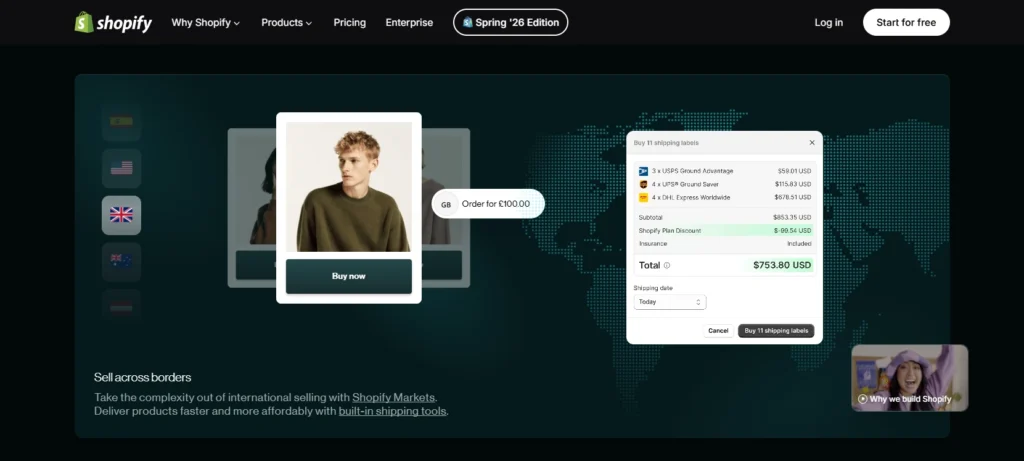
Shopify is a fully hosted, closed-source SaaS platform. You pay a monthly subscription, and in exchange Shopify handles your hosting, SSL certificate, global CDN, security patching, and uptime. It’s the “buy a finished house” approach.
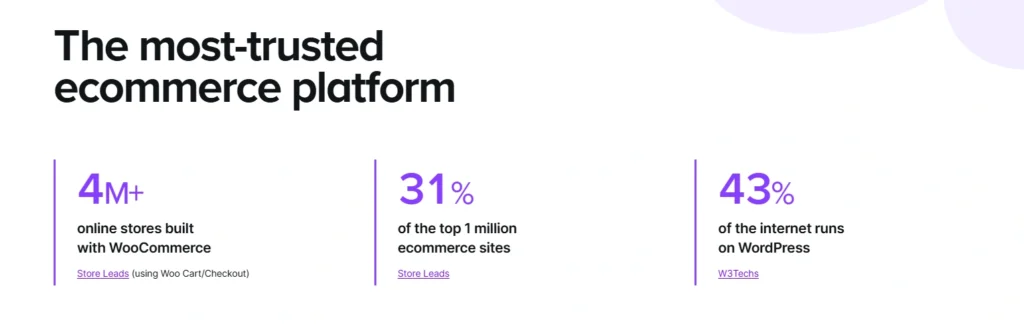
WooCommerce is a free, open-source plugin that runs on top of WordPress. There’s no subscription fee for the software itself, but you’re responsible for buying hosting, installing WordPress, configuring WooCommerce, and maintaining everything yourself. It’s the “buy the land and build it” approach — more work, more freedom.
Neither model is objectively better. The right answer depends on how much time you want to spend on infrastructure versus how much you want to spend on subscription fees.
Who Actually Has More Market Share?
You’ll see a lot of conflicting stats floating around blogs and forums. The most reliable, continuously-updated source is W3Techs, which tracks the technologies behind millions of live websites. As of July 2026, W3Techs reports that WooCommerce powers about 48.4% of all e-commerce websites it tracks, compared to 31.2% for Shopify (source).
That’s a meaningful gap, and it reflects WooCommerce’s massive install base among the millions of small WordPress sites worldwide. That said, market share isn’t destiny — Shopify’s growth has been concentrated in fast-scaling brands and dropshipping stores specifically, which is a different slice of the pie than “every WordPress site with a shop page.” So don’t read the 48.4%/31.2% split as “WooCommerce is better for dropshipping” — it mostly reflects WooCommerce’s dominance across the broader web, not a verdict on which platform converts better for a new dropshipping store.
Pricing: What Will This Actually Cost You?
This is where the two platforms diverge the most, so let’s get specific.
Shopify’s 2026 Pricing
| Plan | Monthly billing | Annual billing | 3rd-party payment fee |
|---|---|---|---|
| Basic | $25/mo | $19/mo | 2.0% |
| Grow | $65/mo | $49/mo | 1.0% |
| Advanced | $399/mo | $299/mo | 0.6% |
| Plus | from $2,300/mo | from $2,300/mo | 0.2% |
New stores typically get a short free trial followed by a promotional rate for the first few months, and Shopify periodically runs credit-back promotions — but the exact offer changes over time, so check Shopify’s pricing page for current terms.
The “3rd-party payment fee” line matters a lot for dropshippers: if you use Shopify Payments, you avoid that extra percentage entirely. Sellers who can’t access Shopify Payments in their region need a third-party gateway and will pay that additional 2.0%/1.0%/0.6%/0.2% on top of standard card processing fees.
WooCommerce’s 2026 Costs
WooCommerce itself is free, but your real costs come from three places:
- Hosting — WordPress hosting ranges roughly $3 to $100+ per month, depending on whether you go with basic shared hosting, managed WordPress hosting, or an enterprise-grade setup. A brand-new dropshipping test store can realistically launch on the low end; a store doing meaningful volume will want managed hosting for reliability.
- Payment processing (WooPayments) — for U.S. merchants, WooPayments charges a base card fee of 2.90% + $0.30, plus +1.50% for international payments, +1.00% for currency conversion, and a $15.00 dispute/chargeback fee. Fees vary by country and payment method, so check WooCommerce’s official fee page for your market. Importantly, there’s no platform-level markup on top of this — you pay the processor’s rate, whichever gateway you choose.
- Plugins and extensions — premium themes, dropshipping connectors, SEO tools, and subscription add-ons typically run $29–$299/year each, on top of your hosting bill.
The Takeaway on Cost
For a lean, bootstrapped test store, WooCommerce can be cheaper to start (a few dollars a month in hosting versus $19–$25/month for Shopify Basic). But once you factor in your own time spent on setup, security, and troubleshooting, Shopify’s all-in subscription often works out to be the better value for solo founders who’d rather buy back their time. WooCommerce pulls ahead when you have technical skills in-house and want to avoid recurring platform fees as you scale.
Setup and Day-to-Day Maintenance
Shopify is built for speed. Sign up, pick a theme, install a dropshipping app, and you can realistically have a store live within an afternoon. Hosting, SSL, backups, and uptime are handled for you, and support is available around the clock.
WooCommerce requires more upfront legwork: buy hosting and a domain, install WordPress, install WooCommerce, then configure payments, shipping, and taxes plugin by plugin. The payoff is full control — but also full responsibility. Security updates, plugin conflicts, and performance tuning are on you (or whoever you hire to manage it).
If you’re a solo founder without a developer on speed dial, this difference alone often decides the debate.
Dropshipping-Specific Features
Neither platform has native one-click dropshipping built in — both rely on apps or plugins.
On Shopify, popular options include DSers (AliExpress sourcing, free tier plus a paid tier for larger catalogs), Spocket and Zendrop (US/EU supplier networks with faster shipping), and Shopify Collective for selling other Shopify brands’ products. Print-on-demand is well covered by Printful and Printify.
On WooCommerce, you’ll find plugins like AliDropship and WooDropship for AliExpress sourcing, free options like the ALD Dropshipping plugin, and the same Printful/Printify integrations available as WordPress plugins. CJdropshipping has also become a popular pick for warehouse-based fulfillment and branded packaging on both platforms.
Whichever app ecosystem you pick, the thing that actually determines your customer experience — and your refund rate — is your supplier and fulfillment partner, not the storefront software. This is exactly where a service like Ship To The Moon earns its keep: instead of gambling on random AliExpress sellers with unpredictable shipping times, you get vetted suppliers, faster fulfillment, and branded packaging that makes your store feel like a real brand rather than a reseller page — and it plugs into either Shopify or WooCommerce, so you’re not locked into one ecosystem just to get reliable shipping.
SEO and Marketing
WooCommerce, running on WordPress, has the edge for pure SEO flexibility — full control over URL structure, content, and plugins like Yoast SEO, all for free. Shopify’s built-in SEO tools (custom titles, meta descriptions, auto-generated sitemaps) cover the essentials well, and its fast, CDN-backed infrastructure is itself an SEO advantage, but deeper customization usually means adding a paid app.
On marketing, both platforms are well equipped: Shopify bundles email marketing, discount codes, and AI-assisted tools like Sidekick and Campaign Autopilot directly into the platform. WooCommerce relies on the broader WordPress plugin ecosystem — Mailchimp, HubSpot, Jetpack — to do the same jobs. Either way, a consistent content or social strategy remains one of the highest-leverage things a new dropshipping brand can invest in.
Performance and Scalability
Shopify’s infrastructure scales automatically — you won’t need to think about server capacity even during a viral traffic spike. WooCommerce’s performance is entirely dependent on your hosting choice: a $5/month shared plan will buckle under real traffic, while a solid managed host and a caching plugin can get you very close to Shopify-level speed. The difference is that on WooCommerce, “very close” takes deliberate configuration; on Shopify, it’s the default.
Customization and Developer Ecosystem
Shopify’s customization happens within its walls: themes, apps, and the Liquid templating language, all built on top of Shopify’s APIs. It’s flexible enough for the vast majority of stores but stops short of full source-code control.
WooCommerce, being open-source PHP running on WordPress, has essentially no ceiling — you can modify anything. That freedom is genuinely valuable for stores with unusual requirements, but it also means “you built it, you maintain it.”
Legal and Tax Compliance
Shopify has invested heavily in built-in compliance tooling — Shopify Tax automates VAT calculation and invoicing for EU/UK sales, and the platform is designed to help merchants meet GDPR and CCPA requirements out of the box. WooCommerce merchants typically rely on third-party plugins and services (Avalara, TaxJar, GDPR consent plugins) to cover the same ground. Neither platform removes your legal responsibility as the merchant — they just differ in how much of the tooling comes pre-installed.
Conversion Rates and User Experience
Dropshipping stores, industry-wide, tend to convert somewhere in the 1%–3% range — this is a platform-agnostic reality of the business model, not something either Shopify or WooCommerce fixes on its own. What actually moves the needle: fast page load times, high-quality product imagery, a frictionless checkout, and visible trust signals like reviews and clear shipping/return policies. Reliable fulfillment — again, the part Ship To The Moon is built around — directly affects your reviews and repeat-purchase rate, which is ultimately what turns a 1% store into a 3% store.
Migrating Between Platforms
If you outgrow one platform or simply change your mind, migration is possible in both directions. Shopify offers official migration tools and guided support for moving product, customer, and order data over from WooCommerce. Going the other way (Shopify to WooCommerce) usually involves a third-party migration tool or manual CSV export/import. Either way, budget time to recreate theme customizations and re-test any store-specific app integrations — migrations are rarely truly “one click.”
So, Which Platform Wins in 2026?
There isn’t a universal winner — there’s a better fit for your situation:
- Just testing an idea, minimal budget, comfortable with some DIY setup? WooCommerce lets you launch for the cost of hosting alone.
- Want to launch fast, skip the server maintenance, and focus purely on marketing and sourcing? Shopify’s all-in subscription is worth the premium.
- Scaling into a real brand with multiple staff, complex checkout needs, or global sales? Both platforms have credible paths — WooCommerce with a strong hosting stack and dev support, Shopify through the Advanced or Plus tiers.
Whichever storefront you choose, your platform is only half the equation. The other half is what happens after the order is placed — and that’s where sourcing and fulfillment quality separates a hobby store from a repeat-customer brand. If you want that side of the business handled by people who do it full-time, Ship To The Moon is built to plug into either Shopify or WooCommerce and take fulfillment off your plate, so you can spend your time where it actually pays off: finding your next winning product.