



If you’ve been exploring dropshipping suppliers, chances are you’ve come across Zendrop.
It’s clean, beginner-friendly, and tightly integrated with Shopify. For many sellers, it’s an easy starting point.
But here’s the catch: As soon as you start scaling – running ads, testing aggressively, or thinking about branding – limitations start to show up. Margins get tighter, sourcing feels restricted, and you don’t have much control.
That’s usually when sellers start looking for a Zendrop alternative—and this is where options like Ship To The Moon come into the picture. Not because Zendrop is bad—but because their needs evolve.
So which one actually makes more sense for you in 2026?
Let’s break it down.
TL;DR: Quick Verdict
Choose Zendrop if:
- You’re just getting started with Shopify
- You want a plug-and-play solution
- You don’t want to deal with sourcing or suppliers
Choose Ship To The Moon if:
- You care about profit margins
- You want more control over products and sourcing
- You’re planning to scale or build a brand
Ship To The Moon vs Zendrop: Side-by-Side Comparison
| Ship To The Moon | Zendrop | |
|---|---|---|
| Integration & Automation | Shopify, WooCommerce, Etsy integrations; API for custom sites; auto ordering, inventory sync, and tracking updates | Integrates with Shopify, ClickFunnels, and TikTok; auto ordering, fulfillment, and tracking; mature system but less flexible; includes Shopify AI store builder |
| Product Sourcing | Product catalog + private supply chain + agent model; on-demand sourcing, custom products, fast sampling | Curated product marketplace; limited sourcing support (Plus plan) |
| Product Price | Factory-direct pricing; better margins | Higher than AliExpress; optimized for shipping speed and total cost |
| Product Compliance | Focus on compliant products (e.g., FDA, CE); supports low-risk selection | Basic quality control; limited compliance transparency; seller responsible |
| Fulfillment Model | Private supply chain + China direct shipping + overseas warehouses (flexible) | Platform-based fulfillment; US warehouse for some products; China ships globally |
| Warehouse Network | Global network (China, US, Europe warehouses) | US warehouses for domestic shipping; China warehouses for global regions |
| Shipping Speed | US: 2–5 days (US warehouses); Global: 6–12 days from China | US: 2–5 days (US warehouse); Global: ~7–15 days from China (avg. 9–12 days) |
| Custom Branding | Custom packaging, logo, inserts, branding support | Custom branding and packaging available |
| Print on Demand | Supported with flexible sourcing | Built-in POD (available on Plus plan) |
| Pricing Model | No subscription; per-order pricing; custom quotes | Freemium + subscription (Pro $49/mo, Plus $79/mo) |
| Hidden Costs | Transparent pricing (quote-based); depends on setup | Product markups + additional service fees |
| Support | 1-on-1 account manager; fast response; fluent English support | Self-service platform; 24/7 support; priority for Plus users |
| Education | Guides, video tutorials, help center; hands-on support (sourcing & supply chain) | Structured training (Zendrop Academy; Plus required) |
| Best For | Scaling sellers, margin-focused, brand builders | Beginners and quick-start Shopify dropshippers |
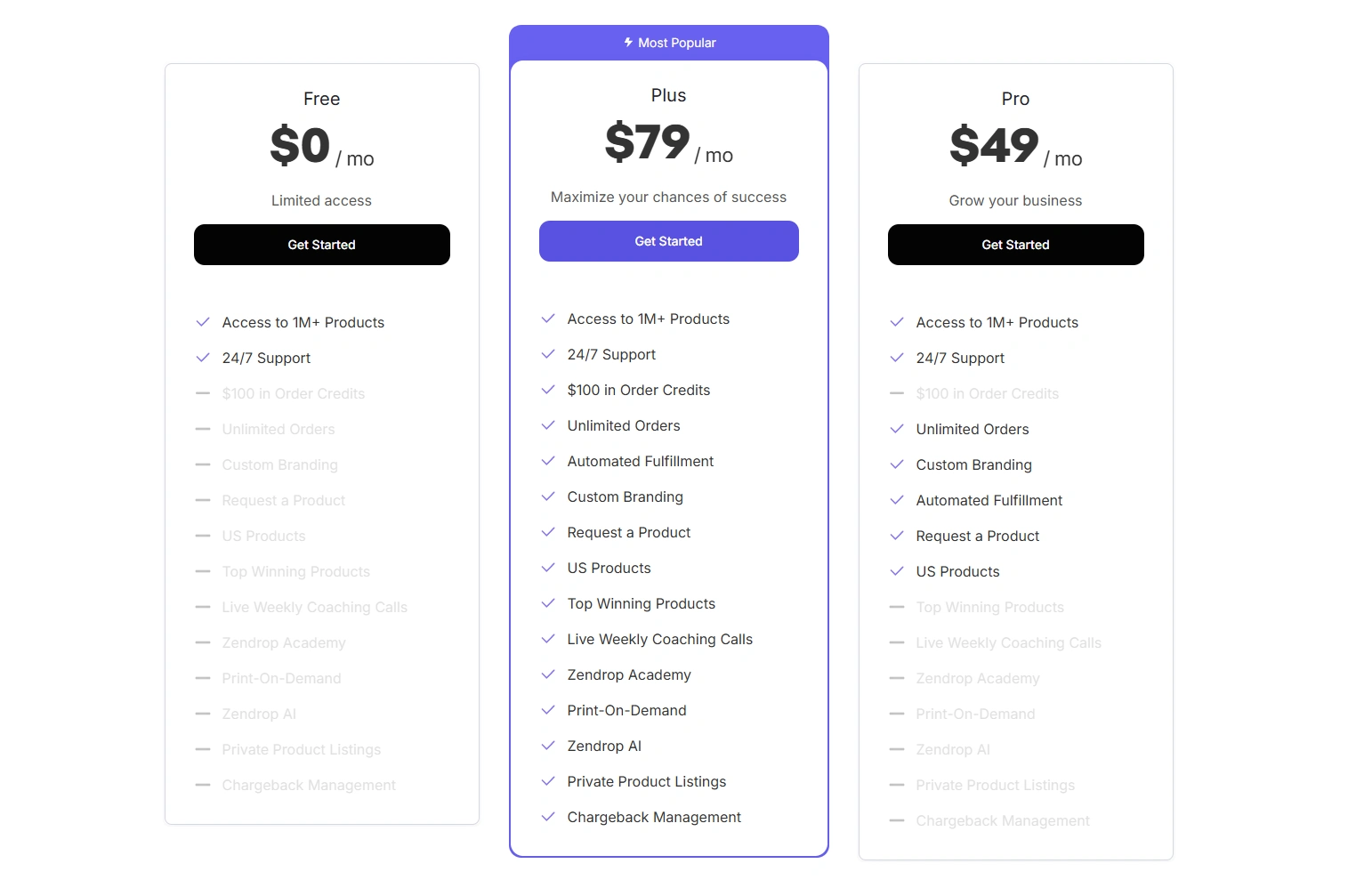
1. Pricing & Profit Margins: Where the Real Difference Shows
This is where things start to separate.
Zendrop simplifies sourcing – but that convenience often comes with built-in product markups and subscription fees.
That might not matter when you’re testing products. But once you start running ads, every dollar counts.
Ship To The Moon, on the other hand, works closer to a factory-direct or agent model. That means:
- Lower product cost
- More room for ad spend
- Higher net profit per order
👉 In short:
- Zendrop optimizes for convenience.
- Ship To The Moon optimizes for profitability.
2. Product Sourcing: Marketplace vs Real Flexibility
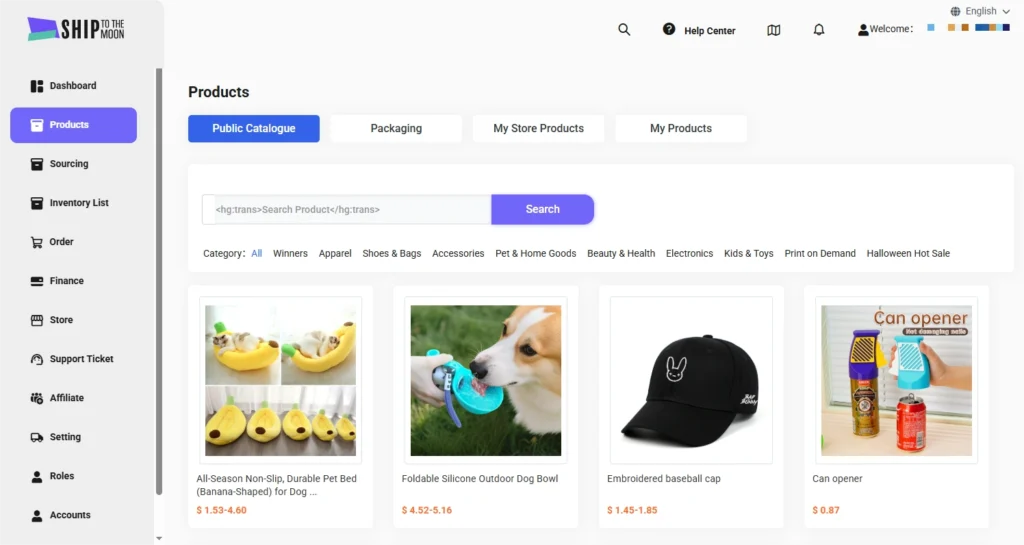
Zendrop gives you a curated catalog. It’s clean, easy, and safe.
That’s great for beginners — but limiting for serious sellers.
If you want to:
- Source a trending product not in their catalog
- Customize a variation
- Improve quality or packaging
You’ll hit a wall pretty quickly.
Ship To The Moon, on the other hand, operates more like a sourcing partner. You’re not stuck with a fixed catalog—you can request products, test samples, and iterate.
That flexibility becomes crucial once you move beyond testing into real scaling.
3. Shipping & Fulfillment: Speed Is Only Half the Story
On paper, both platforms look similar:
- US shipping: 2–5 days
- Global shipping: ~1–2 weeks
But experienced sellers know the real question isn’t just speed—it’s consistency.
Ship To The Moon uses a hybrid system:
- China direct shipping for flexibility
- Overseas warehouses for speed
- Routing optimization based on order volume
That added control can reduce delays, improve delivery rates, and ultimately lower refund requests.
4. Branding: Where Beginners and Real Businesses Split
If you’re just testing products, branding doesn’t matter much.
But once you find a winner, everything changes.
Ship To The Moon supports:
- Custom packaging
- Inserts (thank-you cards, upsells)
- Full private labeling
Zendrop also offers branding — but typically within platform limits or higher-tier plans.
👉 The key difference: One is a feature. The other is a supply chain capability.
5. Support: Platform vs Partner
Zendrop is a software platform. Support is structured, ticket-based, and efficient.
But it’s still… support.
Ship To The Moon gives you something different: a dedicated account manager
That means:
- Faster problem-solving
- Direct communication
- Help with sourcing, logistics, even product decisions
For beginners, this might not matter much. For scaling sellers? It’s often a game changer.
Pros & Cons
Zendrop Pros
- Easy to use
- Fast setup with Shopify
- Clean interface and workflow
Zendrop Cons
- Higher product costs
- Limited sourcing flexibility
- Branding and features locked behind paid plans
Ship To The Moon Pros
- Better pricing and margins
- Flexible sourcing and customization
- Strong branding and fulfillment control
- Dedicated support
Ship To The Moon Cons
- Slightly higher learning curve
- Not as “plug-and-play” as Zendrop
Real Use Cases: Which One Fits You?
Let’s make it practical.
- Testing your first product?
Zendrop is faster to start. - Running TikTok ads at scale?
Ship To The Moon gives you better margins and control. - Building a long-term brand?
Ship To The Moon is the clear winner. - Just want something simple that works?
Zendrop does the job.
Final Verdict
Zendrop is a great starting point. It removes friction and helps you launch quickly.
But dropshipping doesn’t stay simple for long.
Once you start caring about margins, product quality, and brand identity, a platform alone isn’t enough. You need flexibility—and that’s where a private supplier like Ship To The Moon stands out.
In short:
- Zendrop = convenience
- Ship To The Moon = control + scalability
And in 2026, control is what separates casual sellers from serious ones.
FAQ
-
Is Zendrop worth it in 2026?
Yes—for beginners. It’s still one of the easiest ways to start dropshipping, especially with Shopify.
-
What is the best alternative to Zendrop?
For sellers focused on scaling, private suppliers like Ship To The Moon are among the strongest alternatives due to better pricing and flexibility.
-
Is Zendrop good for beginners?
Absolutely. Its simplicity and automation make it ideal for first-time sellers.
-
Can you build a brand with Zendrop?
To some extent, yes—but branding features are limited and often require paid plans. For full control, a private supplier is usually more effective.
-
Why do sellers switch from Zendrop?
Most switch for three reasons:
1. Higher profit margins
2. More control over products
3. Better scalability for ads and branding