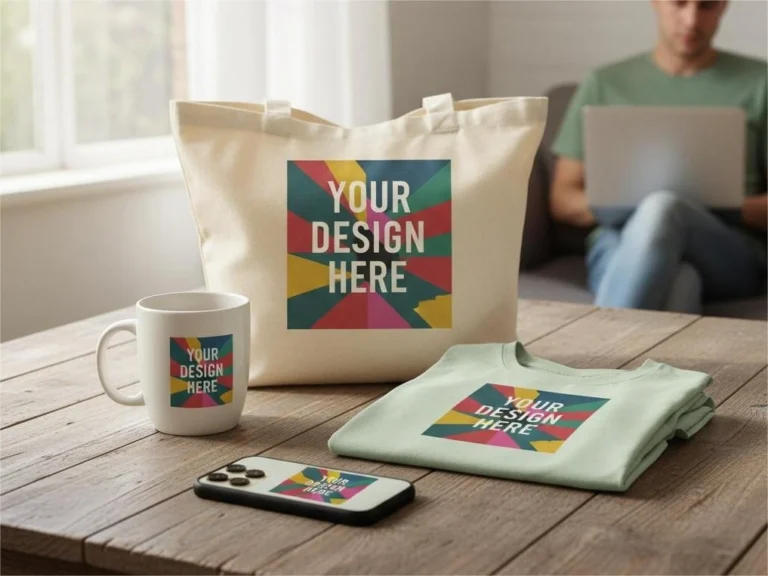


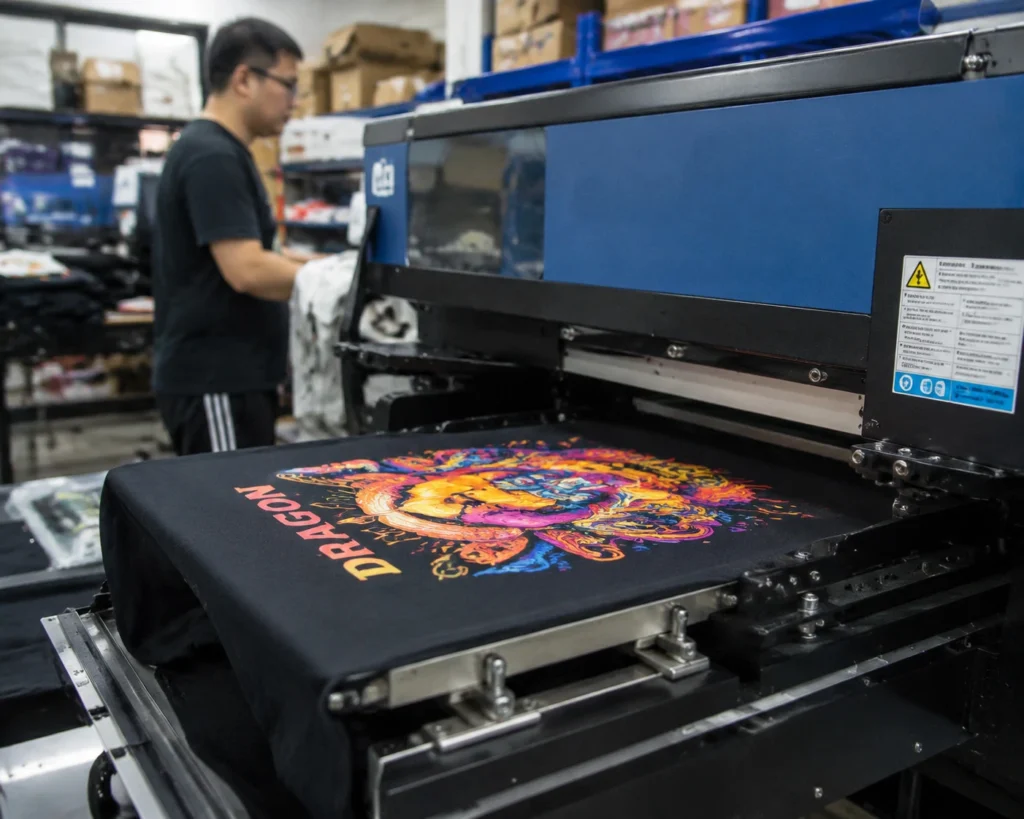
Your POD supplier isn’t a branding decision. It’s a margin lever.
A 3% difference in base cost doesn’t sound like much until you’ve shipped 500 orders and realized it quietly ate your entire ad budget. A two-day production window versus an eight-day one doesn’t sound like much either, until you check your Etsy reviews and see “slow shipping” showing up over and over.
Printful, Printify, and Gelato get thrown around like they’re interchangeable. They’re not. Each one wins in a specific scenario, and most sellers end up using the wrong one simply because it was the first name they recognized. Meanwhile, a growing number of sellers are building their entire operation around China-based suppliers and dropshipping agents that now offer print-on-demand as part of a much bigger toolkit — something that would have sounded risky a few years ago and now looks like the smarter default.
This guide breaks down the suppliers actually worth your time in 2026: what each one is genuinely good at, where it’ll cost you money, and how to think about picking one (or several) based on what you’re actually selling.
How We Evaluated These POD Suppliers
Before the list, it’s worth clearing up a distinction almost every other “best POD” roundup glosses over: print providers vs. print networks.
- Print providers actually own the printers and do the fulfillment themselves. Think Printful, Gelato, CustomCat. You know exactly who’s touching your product.
- Print networks are aggregators that route your order to whichever third-party printer is available. Printify is the best-known example. You get a bigger catalog and lower prices, but quality can vary depending on which facility in the network picks up your order.
Neither model is “better.” They’re just different trade-offs. We evaluated every supplier on this list against five criteria:
- Base cost — what actually eats into your margin
- Shipping speed — because on Etsy and Shopify, speed usually beats price
- Product catalog fit — apparel, wall art, home decor, and niche goods all need different production strengths
- Integrations — how easily it plugs into Shopify, Etsy, WooCommerce, TikTok Shop, etc.
- In-house vs. network model — and what that means for quality consistency
Quick Comparison Table
| Supplier | Best For | Cost Level | Typical Shipping | Model |
|---|---|---|---|---|
| Printful | Overall / premium apparel | Mid-High | 2–7 days | In-house |
| Printify | Catalog size / low cost | Low-Mid | Varies by provider | Network |
| CustomCat | Fast US apparel | Low-Mid | 2–3 days (US) | In-house |
| Spreadshop | Speed + flexibility | Mid | 2 days | In-house |
| Gelato | Global / localized printing | Mid | Varies, often local | Network |
| merchOne | Wall art, home decor, gifts | Mid | Varies (EU strong) | Network |
| QPMN | Trading cards, TCGs, puzzles | Mid-High | Varies | In-house |
| Podbase | Tech accessories | Mid | Fast (24hr+ ship) | In-house |
| CJDropshipping | All-in-one sourcing + POD | Low | Varies (multi-warehouse) | Agent/hybrid |
| Ship To The Moon | Dropshipping + POD + branding | Low-Mid | Varies (global warehouses) | Agent/hybrid |
| HyperSKU | Premium logistics | Mid-High | Fast | Agent |
| Yoycol | Ultra-low-cost apparel | Very Low | Slow | In-house (China) |
| Fourthwall | All-in-one branding | Mid-High | Varies | In-house |
| Apliiq | Private-label apparel | Mid | Varies | In-house |
Best Overall POD Suppliers
Printful
Printful is the safe choice, and that’s meant as a compliment. It runs its own facilities across the US, Europe, and Mexico, which means the quality you get on your test order is the quality your customers get too. No supplier roulette. It’s the go-to if you’re selling apparel above $30 and your Etsy or Shopify reviews depend on tight, consistent quality control. The branding tools are genuinely strong: custom packaging inserts, branded labels, and embroidery options that make your store feel less like a POD shop and more like an actual brand.
The trade-off is cost. You’ll typically pay a few dollars more per item than you would sourcing the same product through a network like Printify.
Printify
Printify doesn’t print anything itself. Instead, it connects you to a network of providers around the world, and that’s exactly why it wins on price and catalog size. If you’re testing dozens of product ideas before committing to a niche, Printify’s low base costs give you room to experiment without torching your margin on every failed test. It’s usually the better pick for Etsy specifically, since Etsy shoppers are more price-sensitive and the lower cost per item lets you stay competitive.
One limitation is that you’re not dealing with one factory but a whole network. Quality can vary between providers, even for the exact same product listing. Ordering a sample before you go live isn’t optional here. It’s essential.
Best for Fast Shipping / US Fulfillment
CustomCat
CustomCat prints in-house and specializes almost entirely in apparel — tees, hoodies, and embroidered pieces. What sellers consistently mention is how well the prints hold up after multiple washes, which isn’t something you can say about every budget POD company. The headline feature is speed: 2–3 day US fulfillment, which is hard to beat if your customer base is domestic.
It doesn’t have Printify’s catalog breadth or Printful’s branding suite, but if your store is apparel-heavy and you want dependable quality without paying Printful prices, CustomCat is the workhorse a lot of sellers stick with for years.
Spreadshop
Spreadshop leans into speed and flexibility — a 2-day production window paired with multiple print methods (DTG, embroidery, sublimation) gives you more room to match the right technique to the right product. It’s a solid pick if you want Printful-level control without fully committing to Printful’s price point.
Best for Global / International Sellers
Gelato
Gelato‘s whole architecture is built around proximity. With 140+ production hubs across 32 countries, its routing algorithm sends each order to the nearest facility. According to Gelato, roughly 90% of orders are produced in the same country where they are delivered. That’s a real advantage if you’re selling to customers scattered across multiple continents and don’t want to eat international shipping costs or wait times.
Because it’s a network model, output can vary between facilities handling the same product. So the same advice applies as with Printify: order a sample first.
merchOne
merchOne isn’t trying to be an apparel giant; it’s built specifically around wall art, home decor, personalized gifts, mugs, and pet products, with EU production facilities in Poland, Germany, and Latvia. If your catalog leans toward home decor rather than T-shirts, merchOne’s infrastructure was designed specifically for that purpose. It wasn’t simply added later as an afterthought, which is often the case with apparel-first platforms.
Best for Niche & High-Margin Products
Apparel margins have been shrinking for years, often sitting around 15–20% after fulfillment and shipping. If you’re looking for higher ceilings, these niche specialists are worth a serious look.
QPMN
QPMN focuses on custom trading cards, TCGs, and personalized puzzles — a category most generalist POD platforms don’t touch seriously. Because these products require specialized manufacturing (think casino-quality card stock, algorithmic booster-pack randomization, rigid tuck-box packaging), sellers in this niche report margins of 60% or more, roughly triple what you’d expect from a basic apparel store.
Podbase
Podbase specializes in tech accessories — phone cases, laptop sleeves, and similar items — and runs everything in-house with no subscription fees, just pay-per-sale pricing. Over 80% of its orders ship within 24 hours, which is a meaningful edge if your customers are used to fast Amazon-style delivery expectations.
Lulu
If you’re self-publishing books, comics, or magazines, Lulu is the specialist rather than a generalist trying to cover everything. Print quality and binding are built specifically for that use case.
Redbubble
Redbubble works differently from the rest of this list — it’s a built-in marketplace, not just a fulfillment backend. That makes it a good option for independent artists who want some organic discovery baked in rather than having to drive 100% of their own traffic.
Best China-Based POD Suppliers & Agents
Here’s something most “best POD supplier” articles skip entirely: a growing share of serious dropshippers aren’t just using a single POD platform anymore. They’re working with China-based sourcing and fulfillment agents that bundle print-on-demand into a much wider service, alongside product sourcing, warehousing, and branding.
Part of this shift is being driven by tariff changes. Tightened “de minimis” exemptions in the US and EU mean customers can get hit with surprise duty fees at the door, which tends to translate into rejected packages and one-star reviews. The fix a lot of sellers have landed on is working with suppliers that maintain local or regional warehouses rather than shipping everything directly from a single factory overseas.
CJDropshipping
CJDropshipping is closer to a full logistics platform than a pure POD company. It maintains warehouses across China, the US, Thailand, and Germany, and its CJ Packet shipping line is built to balance cost against speed rather than maximizing one at the expense of the other. It also offers video shooting services for your products — a genuinely useful perk if you’re building out TikTok Shop content and don’t want to film everything yourself. POD is one piece of a much larger toolkit here, which makes CJDropshipping a strong fit if you’re sourcing a mix of trending products and want custom branding layered on top.
Ship To The Moon
Ship To The Moon is worth understanding for the same reason: it isn’t a pure POD company either. It’s a broader dropshipping and fulfillment platform where print-on-demand is one service among several. What stands out is its “zero-barrier branding” approach: you can add your logo to products with no minimum order quantity, alongside custom packaging, and pair that with POD options when you need fully custom designs rather than just a logo slap. It runs a global warehouse network connected to major carriers like FedEx, DHL, and USPS, and syncs automatically with Shopify, WooCommerce, and Etsy so you’re not manually updating inventory. At a reported 50,000+ clients and 20,000+ daily shipments, it’s built for sellers who want sourcing, branding, and fulfillment handled under one roof rather than stitching together three separate tools — POD included, but not the whole story.
HyperSKU
HyperSKU plays a different game entirely. It doesn’t compete on the lowest price, it competes on logistics stability and a polished software experience. If you’re running a high-ticket store where customers have zero tolerance for delays, HyperSKU’s faster (if pricier) shipping lines are built exactly for that pressure.
Yoycol
Yoycol is a straightforward, China-based POD company with genuinely rock-bottom prices — think all-over-print hoodies for around $10. Shipping is noticeably slower than the Western platforms on this list, but if you’re targeting a price-sensitive audience (students, for example) where margin matters more than delivery speed, the math can still work in your favor.
China-Based Suppliers vs. Western Platforms: What’s Actually Different?
The old assumption that “Chinese suppliers mean cheap, unbranded, unreliable products” doesn’t really hold up anymore. Many Chinese POD manufacturers now invest heavily in quality control, and platforms like Ship To The Moon and CJDropshipping specifically built zero-MOQ branding options to close that exact gap. The real differences to weigh are:
- Price: still meaningfully lower on average, especially for apparel and accessories
- Shipping time: closing fast. Multi-region warehouse networks mean many China-based agents now deliver almost as quickly as Western-only platforms
- Branding: no longer a weak point if you pick an agent that explicitly supports no-MOQ logo and packaging customization
- Compliance/tariffs: the biggest current risk factor — prioritize suppliers with local warehousing to avoid surprise duty fees at checkout
Best for Branding & Premium Positioning
Fourthwall
Fourthwall positions itself as the all-in-one option — the highest quality catalog paired with genuinely professional branding tools. If you want your store to feel like a real merch brand rather than a POD storefront, this is one of the stronger options to test.
Apliiq
Apliiq specializes in apparel with a specific superpower: private labeling. You can add custom neck tags and branded labels that make your hoodies and tees look like they came from your own manufacturing line, not a POD dropshipper. Bulk order discounts also help if you’re moving toward hybrid inventory.
Other Notable Suppliers Worth Testing
- AOP+ — Strong product quality and selection, transparent community support via their Facebook group, but based in Europe, so US-bound orders can face longer shipping windows.
- Gooten — No subscription tiers, pay only when you sell, with a genuinely broad catalog. The downside is delivery: 7–12 business days, noticeably slower than most competitors on this list.
Printify vs. Printful: Which Should You Choose?
This is the single most-searched comparison in the space, so it deserves its own answer.
Choose Printify if: you’re selling on Etsy, your audience is price-sensitive, and you want the lowest possible base cost to protect your margin while staying competitive on retail price.
Choose Printful if: you’re selling apparel above $30, your brand depends on consistent quality, and you’d rather pay a bit more per item than risk a bad review from an inconsistent print job.
Plenty of sellers end up running both — Printify for testing new product ideas cheaply, Printful for the proven bestsellers where quality control actually matters.
How to Choose the Right POD Supplier for Your Store
Five questions will get you most of the way there:
- What are you actually selling? Apparel, wall art, tech accessories, and books all need different manufacturing strengths. Don’t pick a generalist for a specialist job.
- Where do your customers live? If you’re selling internationally, prioritize suppliers with regional warehouses or localized production over ones that ship everything from a single facility.
- How fast do you need to ship? On Etsy especially, a 2-day supplier will consistently outsell a cheaper one with an 8-day production window.
- What platforms do you need to integrate with? Shopify, Etsy, WooCommerce, and TikTok Shop support varies — check before you commit.
- What margin are you targeting? If you’re chasing higher margins, niche specialists (trading cards, tech accessories) often beat saturated apparel categories by a wide margin.
FAQ
Q1: What’s the best POD supplier for beginners?
Printify, generally, the low base cost and huge catalog give you room to test products without eating into a thin margin. If you’re starting with premium apparel specifically, Printful is the safer bet for quality control.
Q2: How much does it cost to start with a POD supplier?
Signing up is free with virtually every platform on this list. Your real upfront cost is ordering a sample of your hero product, typically $15–$40 depending on what you’re selling — and it’s not optional if you care about quality.
Q3: Can I use multiple POD suppliers at once?
Yes, and many established sellers do — one supplier for testing cheaply, another for proven bestsellers where consistency matters more than cost.
Q4: Are China-based POD suppliers reliable for branding and quality control?
It varies by supplier, but the reputation for “cheap and unbranded” is increasingly outdated. Agents like Ship To The Moon and CJDropshipping now offer no-MOQ logo branding and custom packaging specifically to compete on this front. Just order a sample first, the same way you would with any new supplier.
Q5: Do I need a separate design tool on top of my POD supplier?
If you want to compete seriously, yes. POD suppliers handle fulfillment, not the speed or quality of your designs and listings — pairing your supplier with a dedicated design and mockup tool is what separates fast-moving stores from ones stuck on the same five product listings for months.
Final Verdict
If you’re just getting started and want the lowest risk, low-cost entry point: Printify. If quality control and premium positioning matter more than shaving a few dollars off your base cost: Printful. If you want POD bundled with broader sourcing, branding, and fulfillment support under one roof: Ship To The Moon or CJDropshipping are worth a serious look. And if you’re chasing higher margins in a less saturated category, don’t sleep on the niche specialists — QPMN, Podbase, and Lulu are quietly outperforming the crowded apparel space for the sellers who’ve found them.
Test before you commit. Order a sample. Check the shipping time to your actual customer base, not just the supplier’s advertised average. The right POD partner isn’t the one with the biggest name — it’s the one that fits what you’re actually selling.