

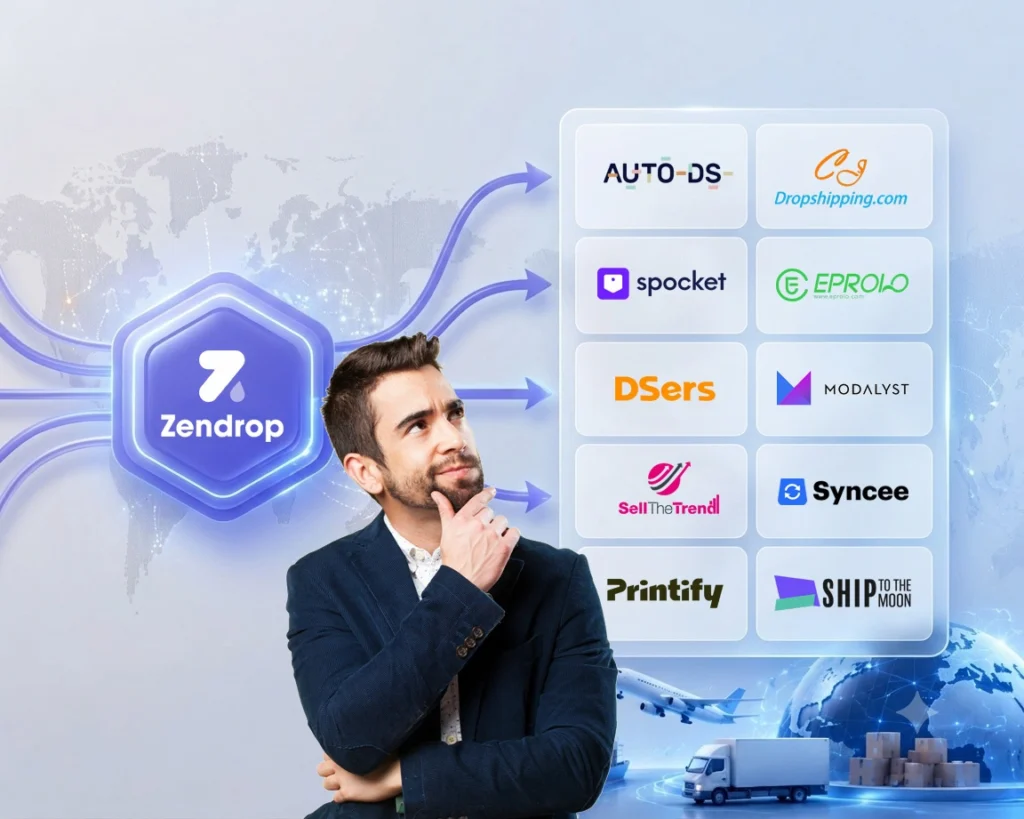
Zendrop has been one of the go-to fulfillment platforms for Shopify dropshippers for years, and for good reason — it’s easy to set up, offers US-based warehouses, and includes branding options for sellers who want to build a real store rather than just flip AliExpress listings.
But Zendrop isn’t the right fit for everyone. Some sellers outgrow its product catalog. Others want faster shipping to Europe or Australia, cheaper pricing at scale, or deeper automation that goes beyond order fulfillment. If you’ve hit one of those walls, here are the platforms worth evaluating instead.
What to Look for in a Zendrop Alternative
Before jumping into the list, it helps to know what actually separates these platforms from one another:
- Supplier network — How many suppliers, and where are they based? More regions usually means faster shipping to more customers.
- Automation — Does the platform just import products, or does it also handle pricing updates, order routing, and tracking sync automatically?
- Shipping speed — Some platforms specialize in fast US/EU delivery; others lean on China-based suppliers with longer transit times but lower costs.
- Branding & private label — Can you add your own logo, custom packaging, or inserts?
- Pricing model — Monthly subscription, free-to-use with markup, or one-time payment?
- Platform integrations — Shopify is a given, but WooCommerce, Wix, and BigCommerce support varies.
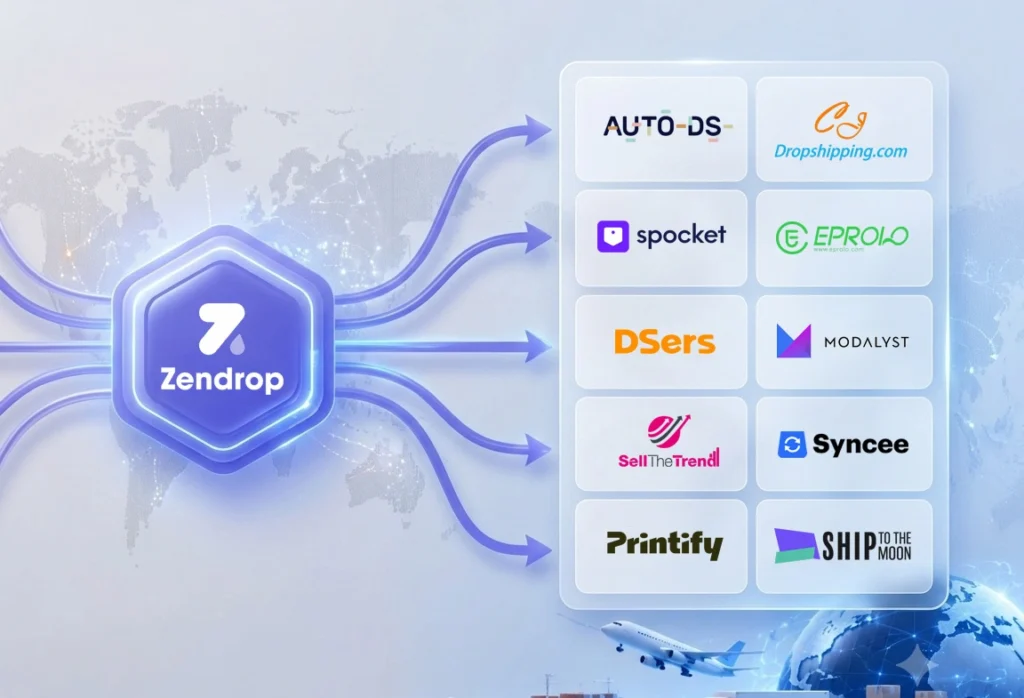
With that in mind, here’s how the major players stack up.
Quick Comparison Table
| Platform | Best For | Supplier Regions | Pricing Model | Private Label |
|---|---|---|---|---|
| AutoDS | All-around automation | US, EU, China, Australia | Monthly subscription | Limited |
| CJdropshipping | Fulfillment at scale | China, with global warehouses | Free to use, markup-based | Yes |
| Spocket | Fast US/EU shipping | US, Europe | Monthly subscription | Limited |
| EPROLO | Free private labeling | US, China | Free to use | Yes |
| DSers | AliExpress bulk orders | China (AliExpress) | Free / paid tiers | No |
| Modalyst | Designer & US brands | US, global brands | Free / paid tiers | Limited |
| Sell The Trend | All-in-one workflow | Multiple (aggregated) | Monthly subscription | No |
| Syncee | Niche stores & B2B sync | US, EU, AU (local suppliers) | Freemium + subscription (scales with synced products) | Low to Medium (depends on supplier) |
| Printify | Print-on-demand | Global print network (US, EU, Asia) | Freemium + Premium subscription | Very Strong |
| Ship To The Moon | Scaling & brand-building | China & Global | Order-based / custom pricing, no SaaS lock-in | Full Support |
Now let’s break each one down.
1. AutoDS
AutoDS is usually the first name that comes up when people search for a Zendrop alternative, and it’s built around one core idea: automate everything after the “add to store” click.
Pros:
- Connects to suppliers across the US, EU, China, and Australia, including marketplaces like Amazon, Walmart, and eBay
- Automates price and stock monitoring so listings don’t go stale
- AI-assisted listing optimization for sellers who don’t want to write product descriptions from scratch
Cons:
- More features can mean a steeper learning curve for absolute beginners
- Some automation tools are gated behind higher-tier plans
Best for: Sellers who want one dashboard to manage sourcing, pricing, and fulfillment without juggling multiple tools.
2. CJdropshipping
CJdropshipping is less of a marketplace and more of a full fulfillment operation — it owns warehouses, does quality control, and can even manufacture custom products for you.
Pros:
- Own warehouses in multiple countries, which helps with shipping consistency
- Strong private label and custom packaging options
- No monthly subscription required for basic use
Cons:
- The dashboard can feel cluttered compared to simpler tools like Zendrop
- Customer support response times are inconsistent, according to seller reviews
Best for: Sellers scaling into private label who want a supplier that also handles manufacturing and packaging.
3. Spocket
Spocket’s whole pitch is speed — it curates suppliers based in the US and Europe so your shipping times look more like a domestic retailer than a dropshipping store.
Pros:
- 2–7 day shipping is realistic for US and EU customers
- Curated supplier list means fewer low-quality products to sift through
- Clean, beginner-friendly interface
Cons:
- Product prices from US/EU suppliers are higher than China-sourced alternatives, which squeezes margins
- Smaller product catalog than China-focused platforms
Best for: Sellers targeting US, UK, or EU customers who want to compete on delivery speed rather than price.
4. EPROLO
EPROLO leans into being the “free” alternative — there’s no monthly fee, and it still offers private labeling and warehousing in both the US and China.
Pros:
- Free to use, which lowers the barrier for new sellers
- Custom branding and packaging available even on the free plan
- Product catalog spans multiple categories
Cons:
- Shipping times (7–15 days for global orders) are slower than Spocket or AutoDS’s faster options
- Less brand recognition than more established platforms, so fewer third-party reviews to lean on
Best for: Budget-conscious sellers who want branding options without a subscription cost.
5. DSers
DSers is built specifically around AliExpress, letting you place bulk orders in a few clicks instead of manually checking out one at a time.
Pros:
- Free plan is genuinely usable, not just a trial
- Bulk ordering saves significant time for high-volume stores
- Deep AliExpress integration means access to a massive product catalog
Cons:
- No private label or custom branding
- Shipping times depend entirely on AliExpress suppliers, which vary widely in reliability
Best for: Sellers running an AliExpress-based store who need faster order processing without upgrading to a full fulfillment platform.
6. Modalyst
Modalyst focuses on connecting stores with designer brands, sustainable suppliers, and US-based manufacturers — a step up in perceived quality from generic dropshipping catalogs.
Pros:
- Access to branded and designer products, which is rare among dropshipping platforms
- US supplier options for faster domestic shipping
- One-click Shopify installation
Cons:
- Free plan has strict limits on the number of products and orders
- Smaller catalog compared to China-focused platforms
Best for: Sellers building a store around name-brand or higher-end products rather than generic trending items.
7. Sell The Trend
Sell The Trend positions itself as a full dropshipping operating system — product research, ad intelligence, store building, and fulfillment in one subscription.
Pros:
- Consolidates tools that would otherwise require separate subscriptions
- Ad intelligence feature helps identify what’s actually converting on social platforms
- Good fit for sellers who want a guided, all-in-one workflow
Cons:
- Monthly cost is higher than single-purpose fulfillment tools
- Less specialized than dedicated fulfillment platforms if all you need is order processing
Best for: Sellers who want product research and ad data bundled with fulfillment instead of managing separate tools.
8. Syncee
Syncee is built around syncing your store with a directory of vetted, mostly local (US, EU, and Australian) suppliers, which makes it a strong fit for niche and B2B-leaning stores rather than generic trending-product shops.
Pros:
- Supplier base skews toward local US, EU, and AU businesses, which helps with shipping speed and product quality perception
- Good for B2B and wholesale-style dropshipping, not just B2C
- Automatic inventory and price syncing keeps listings accurate
Cons:
- Customization and branding depend entirely on the individual supplier you pick — Syncee itself doesn’t add private-label features
- Subscription cost scales up as you sync more products, which can get expensive at higher volumes
Best for: Sellers building a niche or B2B-style store who want reliable local suppliers over cheap, generic ones.
9. Printify
Printify isn’t a traditional dropshipping supplier — it’s a print-on-demand (POD) platform, which makes it the right pick specifically for sellers designing their own products rather than reselling existing ones.
Pros:
- Full design customization: your own artwork and branding go directly on the product
- Supports advanced branding touches like inner neck labels, hang tags, and custom packaging inserts
- Global print partner network across the US, EU, and Asia, so orders can route to the printer closest to the customer
Cons:
- Only relevant if your business model is print-on-demand — not useful for general dropshipping of pre-made products
- Production time adds to shipping time, since items are printed to order
Best for: Sellers who want to build a brand around custom-designed apparel, accessories, or home goods rather than resell generic products.
10. Ship To The Moon
Ship To The Moon is positioned squarely at sellers who’ve moved past the “test random products” phase and are actively building a long-term brand, with sourcing agents in China and globally who work more like a private supply chain partner than a self-serve catalog.
Pros:
- No fixed SaaS subscription lock-in — pricing is order-based or custom, which can suit sellers with irregular order volume
- Comprehensive branding support, including custom packaging, thank-you cards, and white/private labeling
- Access to private sourcing agents for products not available through standard catalogs
Cons:
- Less self-serve than catalog-based platforms — expect more back-and-forth with a sourcing agent rather than instant one-click imports
- Better suited to sellers with some sales history than complete beginners still validating their first product
Best for: Sellers past the validation stage who are ready to invest in packaging, branding, and a more hands-on sourcing relationship.
Which One Should You Actually Choose?
There’s no single “best” answer — it depends on what’s actually holding your store back:
- Want maximum automation with minimal manual work? → AutoDS
- Want the fastest shipping to US/EU customers? → Spocket
- Want free private labeling? → EPROLO
- Want more control over product sourcing? → Ship To The Moon
- Running an AliExpress store and need faster order processing? → DSers
- Want research, ads, and fulfillment in one subscription? → Sell The Trend
- Building a niche or B2B store with local suppliers? → Syncee
- Selling custom-designed, print-on-demand products? → Printify
Final Thoughts
Zendrop is still a solid platform, especially if fast US shipping and private labeling are your main priorities. But “best” depends entirely on where your store actually needs help — sourcing, automation, shipping speed, private label or research. Test one alternative against your current setup before fully switching, since migrating suppliers mid-campaign can disrupt fulfillment for existing customers.