


If you’ve spent any time in the Shopify dropshipping world, you’ve probably used DSers—or at least considered it.
That makes sense. DSers became the default solution for many sellers after Oberlo shut down, largely because it simplified one of the most frustrating parts of dropshipping: processing orders from AliExpress. Instead of manually placing dozens of orders every day, sellers could import products, sync stores, and fulfill orders in bulk from a single dashboard.
For new sellers, that’s a huge improvement.
But something interesting happens as stores begin to grow.
The problems that dominate the first few weeks of a dropshipping business—finding products and automating orders—gradually become less important. New challenges take their place. Shipping delays start generating support tickets. Margins become harder to maintain. Winning products attract dozens of copycats. Payment providers ask for supplier documentation. Customers begin expecting a branded experience rather than a generic package arriving from overseas.
At that point, Many sellers start searching for a DSers alternative and begin exploring more flexible dropshipping suppliers that can provide better sourcing control and fulfillment options.
Not because DSers stopped working.
Because their business reached a different stage.
This is where comparing Ship To The Moon and DSers becomes useful. While both support dropshipping businesses, they solve fundamentally different problems.
What Is DSers?
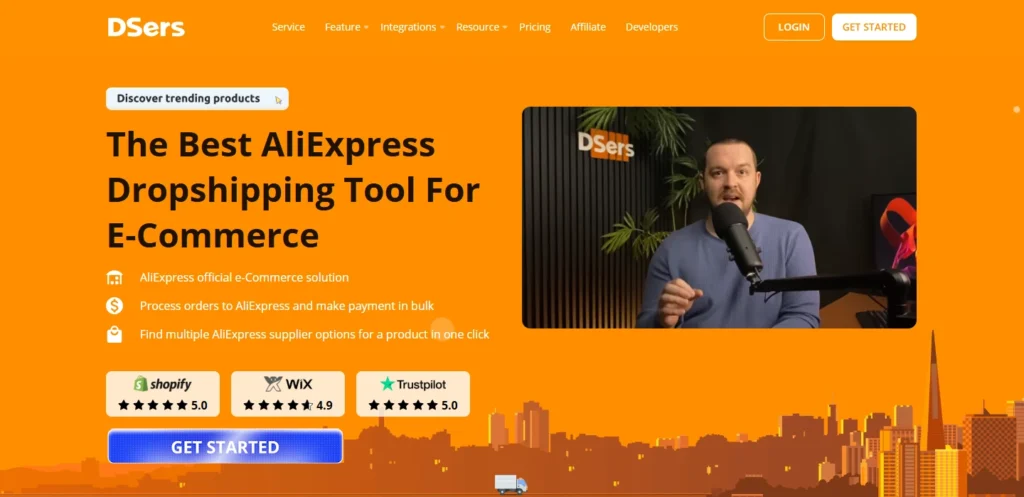
DSers is primarily an order automation platform.
As the official AliExpress dropshipping partner, it allows merchants to connect their Shopify, WooCommerce, or Wix stores with suppliers on AliExpress and related marketplaces. Product imports, inventory synchronization, pricing rules, and bulk order placement are all handled through software automation.
According to DSers, the platform now serves millions of merchants globally and has become one of the most widely used dropshipping tools following the closure of Oberlo.
Its core strengths are easy to understand:
- Fast product importing
- Bulk order processing
- Automated pricing rules
- Inventory synchronization
- AliExpress supplier switching
For testing products and launching a store quickly, these features are valuable.
However, DSers remains a software layer sitting between your store and third-party suppliers.
It does not own warehouses.
It does not inspect products.
It does not negotiate factory pricing.
It does not control logistics operations.
And it does not create a branded customer experience.
Those limitations become increasingly important as order volume grows.
Why More Sellers Are Looking for a DSers Alternative
Most merchants don’t wake up one morning and decide to replace their fulfillment workflow.
Usually, the decision comes from a series of operational frustrations.
Everyone Has Access to the Same Products
One of the biggest advantages of AliExpress is also one of its biggest weaknesses.
Anyone can source from the same listings.
When a product starts gaining traction on TikTok, Facebook, or Instagram, competitors can often identify the supplier within minutes. Before long, dozens of stores are selling nearly identical versions of the same product.
The result is predictable.
Price competition intensifies. Margins shrink. Advertising costs continue to rise.
The product itself becomes a commodity.
For stores that want long-term growth, access to unique sourcing channels becomes increasingly important.
Shipping Expectations Have Changed
A few years ago, customers were more willing to wait several weeks for international deliveries.
That reality has changed dramatically.
Consumers now compare every online purchase against experiences offered by major retailers. Faster delivery is no longer a bonus. It’s increasingly viewed as a baseline expectation.
Many AliExpress-based shipments still require 8–15 business days under standard fulfillment models. In some cases, tracking updates may not appear immediately because labels are generated before packages are physically transferred to logistics providers.
For sellers running paid advertising campaigns, slower delivery times create a hidden cost.
Customer acquisition expenses rise while customer satisfaction declines.
Quality Control Is Outside Your Control
When using a traditional AliExpress fulfillment workflow, products typically move directly from the supplier to the customer.
There is no intermediate inspection process.
If a supplier ships the wrong color, a damaged product, or a defective item, the customer doesn’t blame the supplier.
They blame your store.
As order volume increases, even a small defect rate can generate significant refund requests, chargebacks, and support workload.
Building a Brand Becomes Difficult
Most successful ecommerce businesses eventually realize that sustainable growth comes from brand equity rather than product arbitrage alone.
Yet branding is difficult when products arrive in generic packaging with no custom inserts, no branded materials, and no consistent presentation.
Customers may remember the product.
They rarely remember the store.
That’s a problem if repeat purchases are part of your long-term strategy.
Ship To The Moon vs DSers: Side-by-Side Comparison
The easiest way to understand the difference is to compare them across the areas that matter most to growing stores.
| Dimension | Ship To The Moon | DSers |
|---|---|---|
| Company Type | Dropshipping Agent + Supply Chain Partner | Dropshipping Automation Software |
| Core Positioning | End-to-end sourcing, fulfillment, logistics and branding support | Automated order management between stores and AliExpress |
| Best Use Stage | Scaling stage, brand building, long-term ecommerce growth | Product testing and early-stage dropshipping |
| User Entry Flow | Consult → product sourcing → supply chain testing → scaling | Connect store → import products → automate orders |
| Integration & Automation | Shopify / WooCommerce / Etsy integration with support for API customization; automated order fulfillment. | Integrations with Shopify, WooCommerce, Wix, TikTok Shop, eBay, Walmart, Amazon, etc.; automated order placement via AliExpress API. |
| Product Sourcing | Private suppliers, factories, 1688, product library, custom sourcing | Mainly AliExpress, Alibaba, 1688 marketplaces |
| Supplier & Quality Control | Supplier screening, sourcing negotiation, QC inspection | Depends on marketplace suppliers |
| Product Customization | High: private label, custom packaging, product development | Limited: mainly existing supplier listings |
| Product Cost & Margin | Factory-level pricing and sourcing optimization for higher margins | Public marketplace pricing with limited margin control |
| Product Differentiation | Supports unique products and brand development | Higher risk of product saturation |
| Compliance Support | Supports product screening and compliance solutions (FDA, CE, etc.) | No direct compliance management |
| Fulfillment Model | Agent-managed fulfillment, China shipping, overseas warehouse options | Direct fulfillment from marketplace suppliers |
| Warehouse & Inventory | China, US, EU warehouse solutions with flexible inventory planning | No owned warehouse network |
| Shipping & Logistics | Optimized shipping routes; US warehouse delivery can reach 2–5 days | Depends on supplier and AliExpress shipping methods |
| Branding & Packaging | Logo, inserts, custom packaging, private label | Standard supplier packaging |
| Automation Level | Automated order sync + human supply chain management | Strong software-based order automation |
| Supplier Control | Strong control over sourcing, pricing and fulfillment | Limited control over third-party sellers |
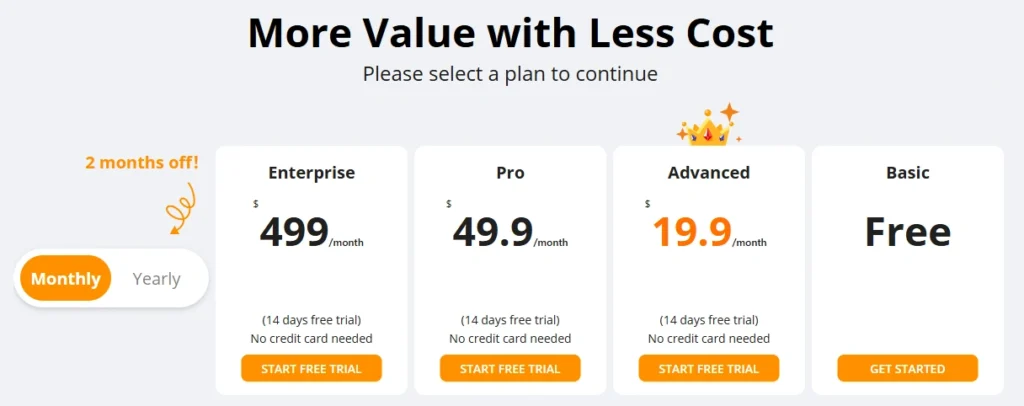
| Pricing Model | No subscription fee; quotation or per-order service model | Freemium SaaS subscription ($0–$499/month plans) |
| Customer Support | Dedicated account manager with direct communication | SaaS customer support |
| Business Risk | Lower risk through supply chain control and quality management | Higher dependence on marketplace suppliers |
| Scalability | Built for scaling stores and ecommerce brands | Best for testing and small-volume operations |
| Best For | Intermediate/advanced sellers seeking higher margins and brand growth | Beginners testing products with AliExpress |
The comparison highlights an important distinction.
DSers helps automate transactions.
Ship To The Moon helps optimize the supply chain behind those transactions.
The Biggest Difference: Software vs Supply Chain
This is where many comparison articles miss the bigger picture.
They compare features.
Successful sellers eventually compare outcomes.
DSers is excellent software.
But software alone cannot solve supply chain problems.
If a supplier raises prices, software doesn’t negotiate better factory rates.
If a product arrives damaged, software doesn’t inspect inventory.
If shipping delays increase refund requests, software doesn’t build a faster logistics route.
These are supply chain challenges rather than software challenges.
Ship To The Moon approaches dropshipping from a different angle.
Instead of focusing primarily on automation, the company acts as a sourcing and fulfillment partner. Products can be sourced through factories, 1688 suppliers, private manufacturing networks, and specialized sourcing channels that are often inaccessible through standard AliExpress workflows.
That distinction becomes increasingly valuable once a store has identified a winning product.
At that stage, improving margins by several dollars per order often matters more than importing another hundred products.
Which Option Is More Profitable?
Many sellers compare DSers and alternatives based on subscription fees.
That’s usually the wrong comparison.
The real question is how much profit remains after product costs, shipping, refunds, and customer acquisition expenses.
Consider a simplified example.
A product sourced through a public marketplace might cost:
- Product cost: $12
- Shipping cost: $6
- Total landed cost: $18
The same product sourced through a dedicated agent network may look like this:
- Product cost: $7
- Shipping cost: $4
- Total landed cost: $11
The difference is $7 per order.
At 20 orders per day, that represents roughly $4,200 per month in additional gross margin.
At 100 orders per day, the gap becomes far more significant.
Of course, actual savings vary by product category and order volume. But the principle remains consistent.
In mature ecommerce operations, improving sourcing efficiency often has a larger impact on dropshipping profit margin than reducing software costs.
Who Should Use DSers?
DSers remains one of the best options for certain sellers.
It is particularly effective if:
- You are launching your first store
- You are testing multiple products
- Daily order volume is still low
- You want the fastest possible setup
- You rely heavily on AliExpress sourcing
For these scenarios, DSers offers tremendous value.
The ability to launch quickly without inventory commitments remains one of its strongest advantages.
Who Should Choose Ship To The Moon?
The profile is different.
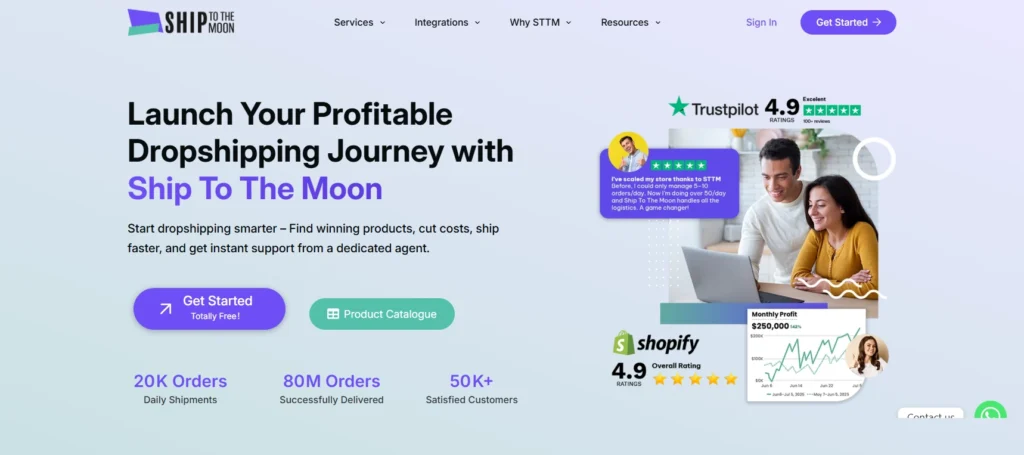
Ship To The Moon generally makes more sense when a seller has already validated demand and is looking for operational advantages.
Common scenarios include:
- A product is consistently generating sales
- Advertising budgets are increasing
- Faster shipping is becoming important
- Private labeling is under consideration
- Profit margins need improvement
- Customer experience has become a competitive priority
At this stage, the goal is no longer simply launching products.
The goal is building a business that competitors cannot easily replicate.
That usually requires stronger control over sourcing, logistics, and branding.
Can You Use DSers and Ship To The Moon Together?
In practice, many successful stores do exactly that.
The decision is rarely binary.
A common progression looks like this:
Product Research
↓
DSers + AliExpress
↓
Winning Product Identified
↓
Ship To The Moon Sourcing & Fulfillment
↓
Private Label Development
↓
Warehouse Inventory
↓
Brand Expansion
This progression reflects how many ecommerce businesses naturally evolve.
During the testing phase, flexibility matters most.
During the scaling phase, control matters most.
Different tools serve different objectives.
Final Verdict: Is Ship To The Moon a Good DSers Alternative?
The answer depends entirely on what problem you’re trying to solve.
If your primary goal is importing products, synchronizing orders, and automating AliExpress fulfillment, DSers remains one of the strongest solutions available.
If your primary goal is improving margins, reducing fulfillment risk, speeding up delivery, implementing private labeling, and building a defensible ecommerce brand, then a supply chain partner becomes increasingly important.
That is why many growing stores eventually move beyond an AliExpress-only workflow.
Not because the software failed.
Because the business itself evolved.
For new sellers, DSers can be an excellent starting point.
For scaling sellers, Ship To The Moon represents a different category of solution—one focused less on order automation and more on building the operational foundation required for long-term ecommerce growth.