

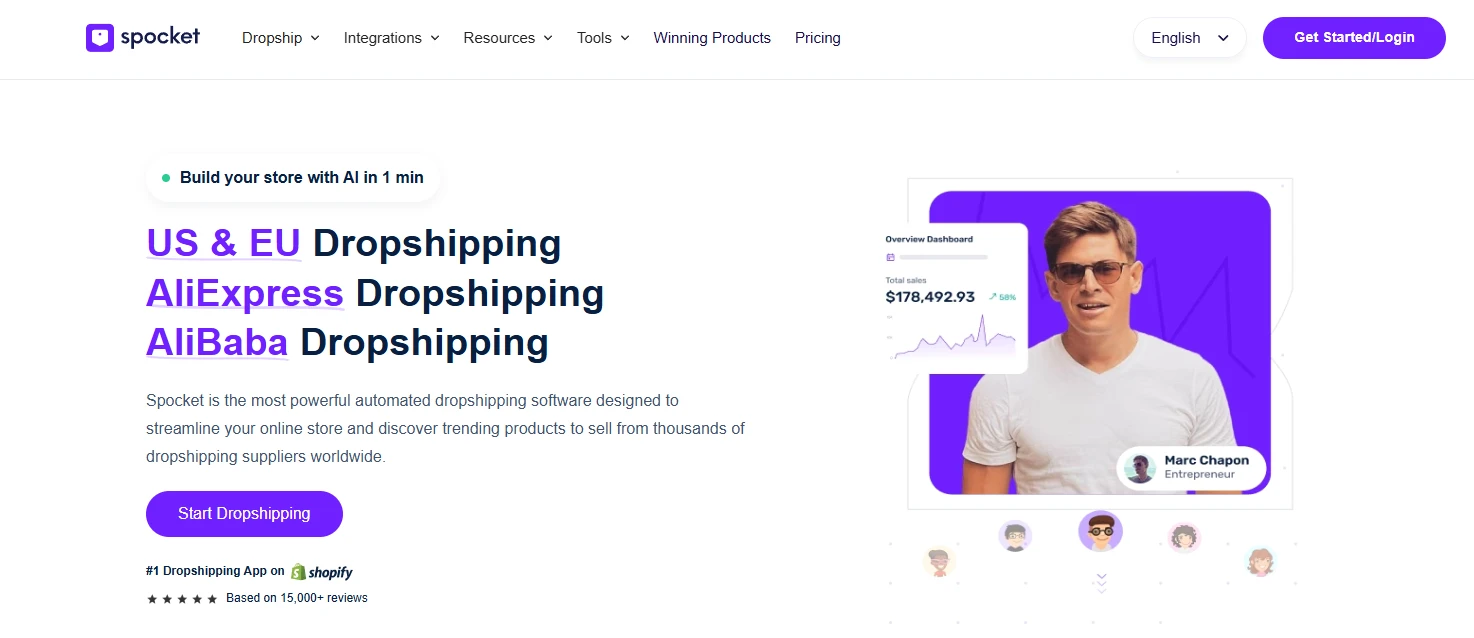
When Saba Mohebpour founded Spocket in Vancouver in 2017, the aim was clear: solve the chronic problems early dropshippers faced with long shipping times and unreliable suppliers. For Shopify and WooCommerce sellers, the platform promised access to a curated network of US and EU suppliers, faster shipping, and automated inventory and order tracking. Over time, Spocket became a popular tool for merchants seeking to serve Western markets without building a complex logistics infrastructure.
Its advantages are evident. About 80% of suppliers are based in the US or Europe, allowing domestic orders to arrive in 3–5 days. The platform enforces strict supplier vetting—covering inventory ownership, wholesale discounts, and consistent fulfillment performance—which reduces risks of stock issues or order failures. Built-in automation, from product import to global pricing rules, lowers the operational burden, especially for early-stage sellers trying to scale quickly.
Yet, user feedback over the past few years highlights recurring challenges. Discussions on Reddit, Trustpilot, Shopify App Store, and G2 reveal frustrations with automatic subscription renewals, fragmented customer service, and split shipments when multiple items in one order come from different warehouses. Branding is another limitation: while Spocket supports custom invoices, more advanced packaging or private-label options remain constrained.
This mix of strengths and quirks naturally raises a question: if you’re building a brand-focused ecommerce business in 2026, is Spocket the right fit—or could alternatives like Ship To The Moon better align with your goals?
As more merchants search for the best Spocket alternative, the conversation has shifted beyond shipping speed alone. Sellers now compare dropshipping suppliers based on profit margins, branding flexibility, fulfillment quality, and long-term scalability. That’s where the comparison between Ship To The Moon and Spocket becomes particularly relevant.
Platform Overview
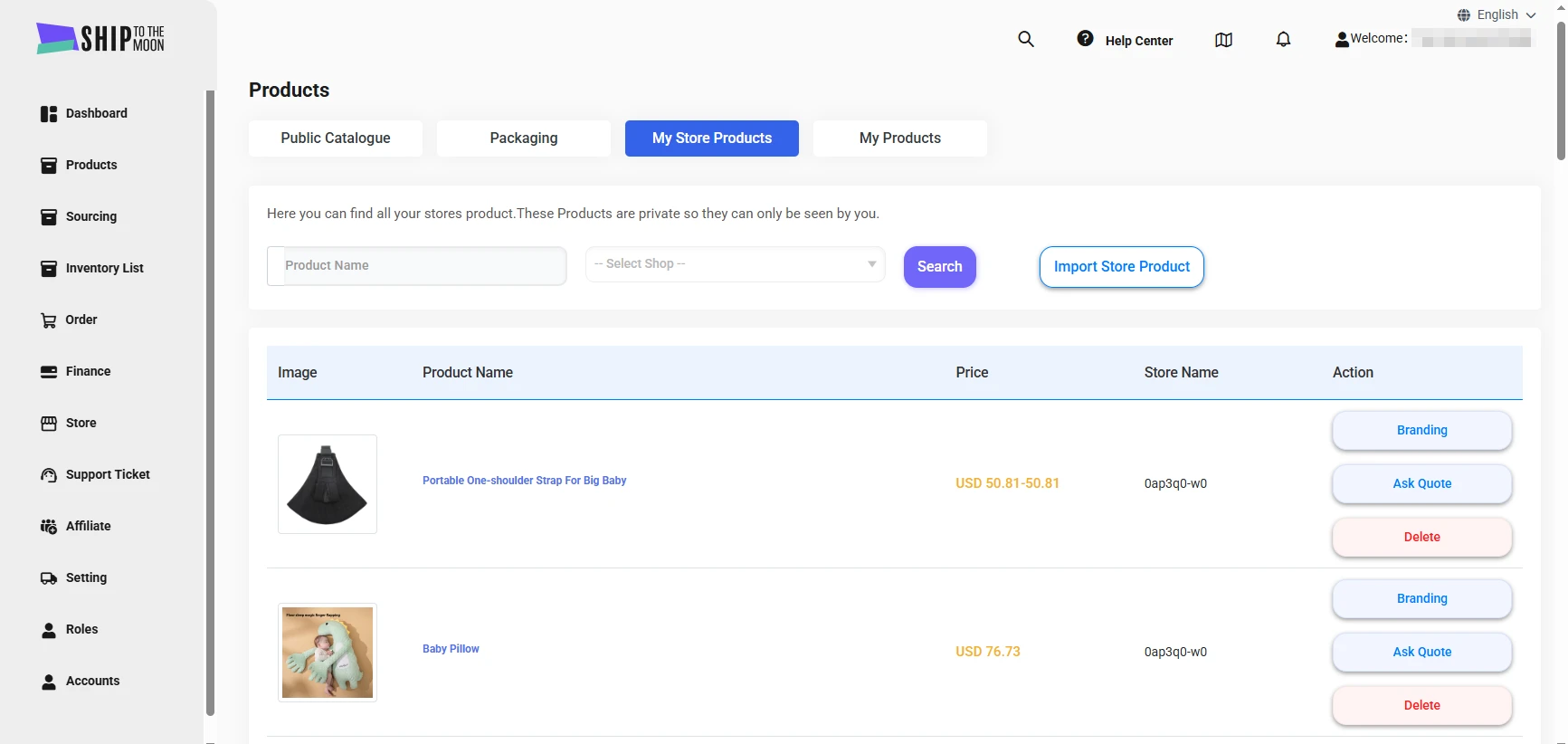
Ship To The Moon positions itself as a supply chain and fulfillment partner rather than a traditional supplier marketplace. Through a combination of private sourcing agents, vetted dropshipping suppliers, and flexible warehouse fulfillment, merchants gain greater control over costs, branding, and product quality.
Spocket, by contrast, is a SaaS marketplace connecting merchants to third-party US and EU suppliers. It excels in fast plug-and-play access to vetted suppliers, ideal for merchants testing products in Western markets. However, the platform operates largely as a “supplier directory,” with limited ability to influence product branding or consolidation.
Key Comparison: Ship To The Moon vs Spocket
| Items | Ship To The Moon | Spocket |
|---|---|---|
| Business Model | Supply chain service provider + sourcing agent + fulfillment partner | SaaS dropshipping marketplace connecting merchants with third-party suppliers |
| Integration & Automation | Shopify, WooCommerce, Etsy, custom API integration; automatic order routing, inventory sync, tracking updates | Shopify, WooCommerce, Wix, BigCommerce, Squarespace, eBay and more; automated order fulfillment and inventory sync |
| Product Sourcing | Product catalog + private supplier network + agent sourcing; supports custom sourcing, sample development, winning-product sourcing | Supplier directory model; primarily relies on marketplace suppliers from US and EU; limited custom sourcing capabilities |
| Supplier Relationship | Dedicated sourcing agents directly connecting merchants with factories and manufacturers | Merchant works through platform suppliers; no dedicated sourcing agent by default |
| Product Selection | Virtually unlimited sourcing based on customer requirements | 1M+ curated products plus AliExpress integration |
| Product Price | Factory-direct pricing; generally lower sourcing cost and higher margin potential | US/EU suppliers often charge 30–60% higher wholesale prices compared with direct China sourcing |
| MOQ Requirements | No MOQ for most dropshipping products; supports gradual scaling | No MOQ for listed products |
| Product Compliance | Supports FDA, CE, RoHS and other compliance screening; suitable for regulated categories | Supplier vetting exists but compliance responsibility largely remains with suppliers and merchants |
| Fulfillment Model | Private supply chain + China fulfillment + overseas warehouse fulfillment | Distributed supplier fulfillment model; suppliers ship directly to customers |
| Warehouse Network | China warehouses + US warehouses + EU warehouses + supplier network | Primarily supplier-owned warehouses located in US and Europe |
| Order Consolidation | Supports consolidation and combined packaging through centralized fulfillment operations | Limited; multi-supplier orders are often split into multiple shipments |
| Shipping Speed (US) | 5-9 business days from China warehouses | Typically 3–5 business days for US domestic suppliers |
| Shipping Speed (Global) | 6–12 days from China to many major markets | Depends on supplier location; international orders vary significantly |
| Inventory Control | Agent-assisted inventory monitoring and supplier coordination | Inventory managed independently by each supplier |
| Custom Branding | Custom packaging, logo printing, inserts, thank-you cards, private label support | Primarily branded invoicing; limited physical packaging customization |
| Private Label Capability | Strong; suitable for building branded ecommerce businesses | Basic; mainly invoice branding rather than full private labeling |
| Print on Demand | Supported through sourcing network and manufacturing partners | Supported through selected suppliers |
| Product Customization | Product modification, packaging customization, logo application, ODM/OEM support | Limited customization depending on supplier capabilities |
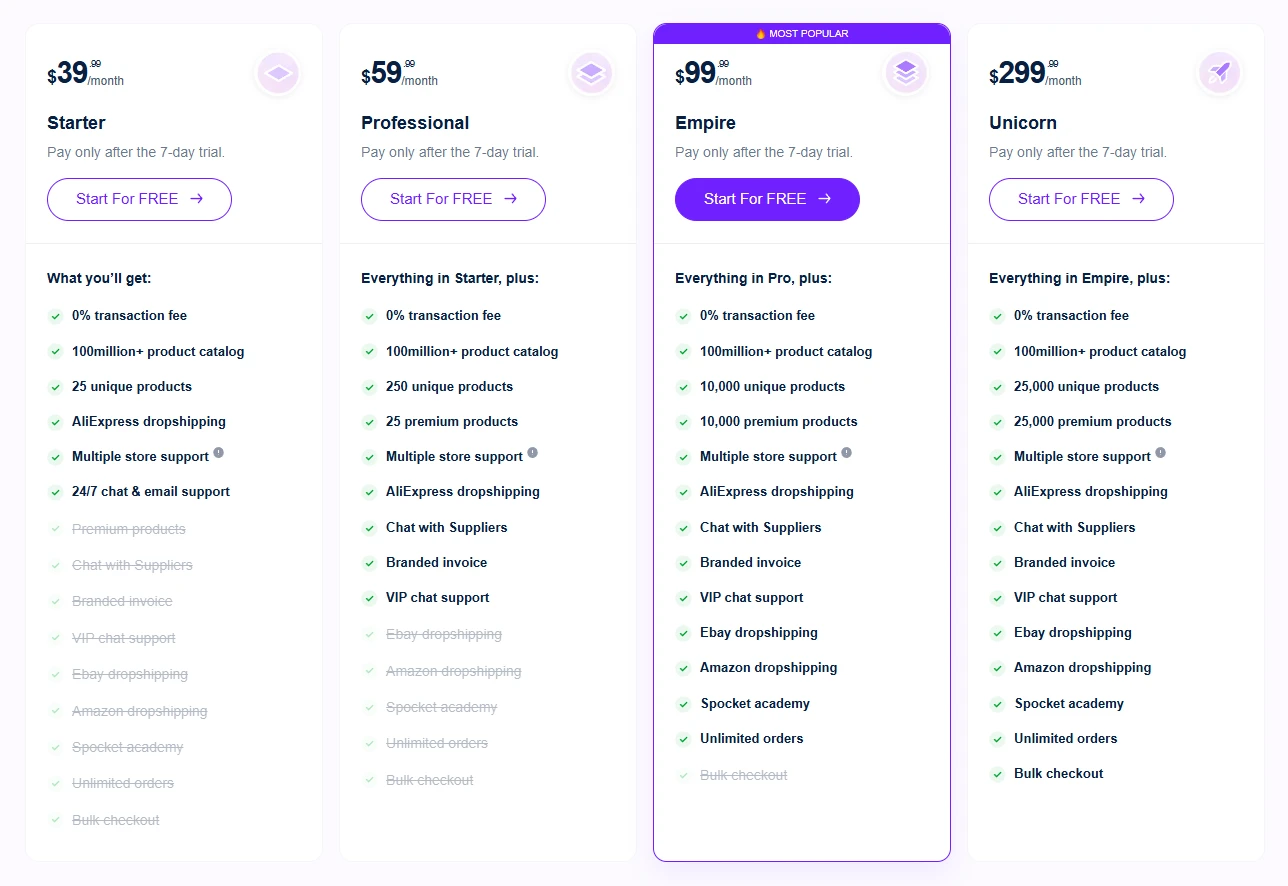
| Pricing Model | No monthly subscription; pay per order or customized fulfillment quote | Subscription-based SaaS model ($39.99–$299.99/month), if pay annually, free 8 months off. |
| Upfront Cost | Low; no mandatory software subscription | Monthly subscription required for most useful features |
| Hidden Costs | Pricing discussed upfront; generally transparent service-based pricing | Subscription fees, supplier markups, shipping fees, potential multi-package costs |
| Customer Support | Dedicated 1-on-1 account manager and sourcing support | Standard support; VIP support available only on higher-tier plans |
| Communication | Direct communication with account manager and sourcing agent | Platform ticketing and supplier-mediated communication |
| Scalability | Designed to support scaling brands and long-term ecommerce operations | Suitable for testing and growth stages, but can become expensive at scale |
| Brand Building | Strong emphasis on private label and brand development | Limited branding depth |
| Best For | Medium-to-advanced sellers, scaling brands, private-label businesses, higher-margin ecommerce operations | Beginners to intermediate dropshippers targeting US/EU markets with fast local shipping |
Product Sourcing: Marketplace vs Agent Model
One of the biggest differences lies in how products are sourced.
Spocket gives merchants access to a large network of suppliers, making it easy to launch quickly. For sellers looking for general Shopify dropshipping suppliers, this approach can be convenient.
Ship To The Moon takes a different route. Instead of relying solely on a marketplace directory, merchants can work directly with sourcing agents who identify manufacturers, negotiate pricing, verify quality, and arrange custom production when needed.
For businesses focused on margin optimization, this agent-based approach often creates opportunities that traditional supplier marketplaces cannot offer.
Practical Implications for Merchants
The real question isn’t which platform is universally better. It’s which model fits your business today.
Many sellers start by searching for dropshipping suppliers with fast shipping and low setup complexity. In that situation, Spocket can be an effective solution.
However, once a store begins generating consistent orders, new priorities emerge: reducing fulfillment costs, improving customer experience, and building a recognizable brand. That’s often the point where merchants begin evaluating Spocket competitors and more customized fulfillment solutions.
- Early-stage sellers often lean toward Spocket. It allows fast integration, access to vetted suppliers, and rapid testing of products in US/EU markets without heavy upfront costs. However, as orders grow, the platform’s distributed supplier network may lead to multiple packages for a single order, higher shipping costs, and fragmented branding.
- Growing or brand-focused merchants may prefer Ship To The Moon. Its private agents, centralized fulfillment, and branding capabilities allow sellers to optimize costs, control compliance, and provide a premium unboxing experience—key for building long-term customer loyalty.
Example: A jewelry seller testing multiple product lines might start with Spocket to validate which items sell. As demand stabilizes, switching to Ship To The Moon enables consolidated shipments, custom packaging, and higher profit margins, while maintaining regulatory compliance in multiple markets.
Use Case Scenarios
| Stage | Objective | Recommended Platform |
|---|---|---|
| Testing & Validation | Low-cost product experimentation | Spocket (Starter/Professional Plan) |
| Growth & Reliability | Fast shipping, reduced chargebacks, basic branding | Spocket Professional or Ship To The Moon (entry-level service) |
| Scaling & Brand Building | Consolidated fulfillment, custom packaging, private labeling | Ship To The Moon |
Ship To The Moon’s model emphasizes control and brand experience, while Spocket focuses on speed and convenience for merchants still in the experimentation phase.
Strategic Takeaways
- Ship To The Moon is ideal for merchants looking for a scalable dropshipping fulfillment service that combines sourcing, warehousing, branding, and logistics under one operational framework.
- Spocket is suitable for beginner to mid-stage sellers who prioritize US/EU fulfillment speed and easy integration. However, subscription costs, higher supplier prices, and fragmented logistics may become limiting factors as order volume grows.
When deciding between the two, consider your current operational stage, profit goals, and branding strategy. For merchants aiming to build a recognizable brand while keeping supply chain flexible, exploring Ship To The Moon services can be a strategic choice.
Conclusion
For merchants searching for a Spocket alternative, the answer ultimately depends on where the business is headed.
If the goal is to launch quickly using a network of pre-vetted suppliers, Spocket remains one of the most recognizable platforms in the market.
If the goal is to build a more defensible ecommerce brand with better margins, customized packaging, and flexible fulfillment, Ship To The Moon offers a different path—one that moves beyond the traditional dropshipping supplier marketplace model.
As competition in ecommerce continues to intensify, the most successful merchants are increasingly choosing partners that help them build assets, not just fulfill orders.