


AI tools can help dropshippers discover product ideas, analyze trends, generate product descriptions, and identify potential market opportunities. However, an AI recommendation does not guarantee that a product will sell or generate a profit.
A product may look promising because it is trending on social media, has a low supplier price, or receives a high opportunity score from an AI tool. Yet the same product could have weak purchase demand, intense competition, unreliable suppliers, or insufficient margins after shipping and advertising costs. The solution is to validate AI dropshipping products before investing heavily in inventory, store development, or paid advertising.
The goal is simple: use AI to discover opportunities, then use real-world evidence to decide which products deserve your investment.
Before investing in an AI-recommended product, it helps to understand the bigger picture. The guide to is AI dropshipping profitable explains the business model, key costs, and factors that influence profitability. Once you understand the economics, use the validation steps below to assess individual products before committing your budget.
Understand AI Product Validation
AI dropshipping product validation is the process of checking whether an AI-recommended product has enough evidence to justify selling it.
AI tools can help you generate ideas and organize information quickly. Depending on the tool and its data sources, they may also help analyze search trends, competitor listings, customer feedback, and estimated margins. However, an AI-generated recommendation may rely on incomplete, outdated, or inaccurate information. A confident explanation or high product score should not replace independent verification.
Before moving forward with a product, validate four essential factors which form the foundation of a practical product validation process:
- Demand: Are people interested in buying this product in your target market?
- Competition: Can you offer a meaningful reason for customers to choose your store?
- Supply: Can you source the exact product reliably at acceptable quality and shipping terms?
- Profitability: Can the product generate a positive contribution after all relevant costs?
For example, AI might recommend a portable pet grooming tool because social media engagement is increasing. Before listing it, check whether people are searching for it, whether comparable products are already widely available, whether customers complain about existing alternatives, and whether your supplier can deliver a reliable product at a workable price.
The key principle is treating every AI-selected product as a hypothesis, not a proven winner.
Validate Demand With Independent Market Data
The first question is whether customers actually want the product. Social media views, AI-generated trend scores, and attractive product images can indicate interest, but they do not necessarily demonstrate purchase intent. Use multiple sources to understand demand in your intended market.
Check Search Trends and Buyer Intent
Start with Google Trends to examine how interest in the product has changed over time.
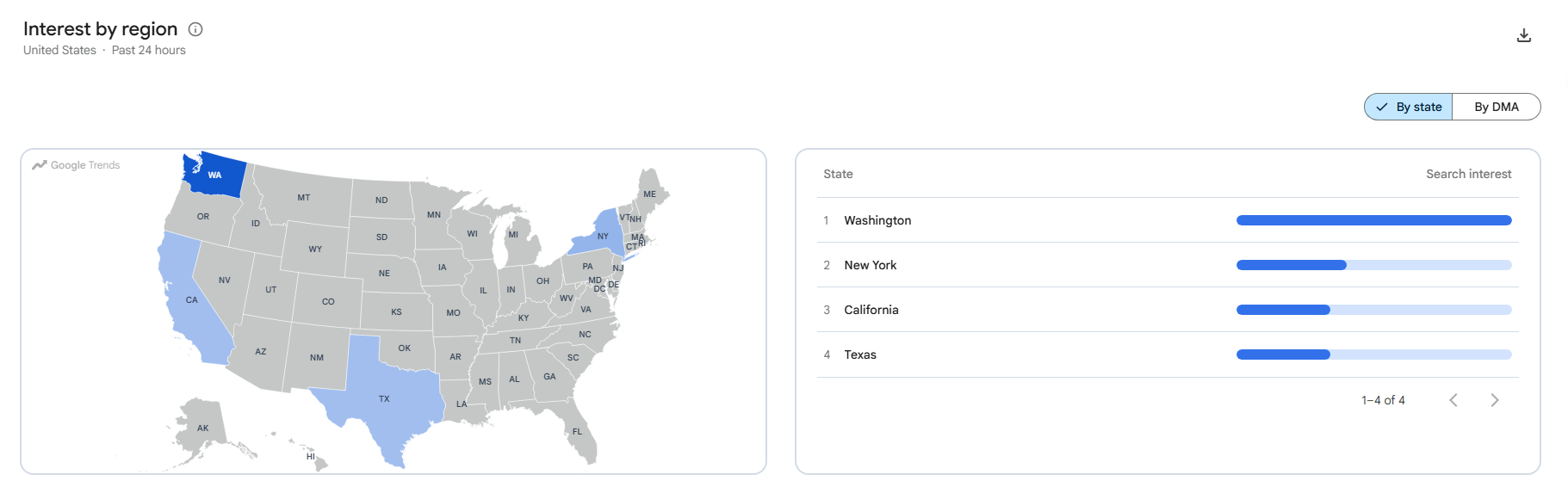
Compare relevant search terms and select the countries or regions where you plan to sell. Look for patterns such as:
- Consistent interest over time.
- Recent growth that is not explained by a single short-lived event.
- Seasonal demand that matches your intended selling period.
- Differences in interest between target markets.
Google Trends reports relative search interest rather than absolute search volume or sales. A rising trend therefore indicates increased search activity, not guaranteed commercial demand.
Next, research relevant keywords using a keyword research tool or search engine suggestions. Compare broad terms with specific, purchase-oriented queries. For example, someone searching for “pet grooming” may be researching a topic, while someone searching for “quiet pet nail grinder for small dogs” may be closer to making a purchase.
Neither query guarantees a sale, but understanding search intent helps you assess whether the product matches what potential customers want.
Look for Evidence Beyond Search Data
Use additional sources to determine whether interest translates into commercial activity.
| Source | What to investigate | What it can tell you |
| Google Trends | Search interest over time and by region | Whether interest is growing, stable, or seasonal |
| TikTok, Instagram, and YouTube | Product demonstrations, comments, and repeated questions | Whether people engage with the product and its use cases |
| Amazon and other relevant marketplaces | Comparable listings, reviews, and visible sales indicators where available | How established products are positioned and reviewed |
| Competitor stores | Product availability, pricing, offers, and positioning | How sellers are attempting to monetize the demand |
| Search results | Commercial pages, product comparisons, and shopping listings | Whether the market has meaningful buying-oriented activity |
Do not interpret viral engagement as proof of profitable demand. A video may attract millions of views because it is entertaining, even when few viewers are willing to purchase the featured product. Ideally, find at least two independent demand signals that support the same opportunity.
Record the target market, keywords, observation period, and source for each demand claim. If the evidence is weak or contradictory, keep the product on your research list instead of immediately launching it.
Analyze Competitors and Find a Clear Differentiator
A product can have strong demand and still be difficult to sell profitably. If many stores offer nearly identical products, you may struggle to compete on price, advertising costs, delivery speed, or customer trust.
The objective is not simply to find a product with low competition. It is to identify a product for which you can offer a credible advantage.
Examine Competing Products
Search for the product and close alternatives in your target market. Review several comparable listings and record:
- Selling prices and promotional offers.
- Product specifications, variations, and bundles.
- Product images, videos, and demonstrations.
- Shipping estimates and return policies.
- Customer reviews and recurring complaints.
- How competitors explain the product’s benefits.
You can also use the Meta Ad Library to investigate active advertising for products in your niche. Active advertisements show that a business is promoting an offer, but they do not prove that the campaign is profitable. Likewise, the absence of visible advertising does not automatically mean there is no demand.
Use Customer Complaints to Identify Opportunities
Customer reviews can reveal gaps that AI-generated product summaries may overlook.
Look for recurring complaints about:
- Poor product quality.
- Difficult setup or confusing instructions.
- Fragile materials.
- Missing accessories.
- Misleading product images.
- Unclear sizing or compatibility.
- Slow delivery or inadequate packaging.
These complaints may suggest ways to improve your offer, provided you can genuinely address the underlying problem. For example, if customers frequently complain that a product is difficult to assemble, you could differentiate your offer with a verified demonstration video, clearer instructions, or a compatible accessory bundle.
However, do not assume that every complaint represents a profitable opportunity. Confirm that the problem matters to enough buyers and that your supplier can provide a better solution.
Define Your Unique Selling Proposition
Before listing the product, complete this sentence:
“Our product is a better choice for [specific audience] because [verifiable benefit].”
If you can only compete by offering the lowest price, revisit your product choice or positioning. A strong offer may instead rely on better product information, a more relevant bundle, reliable fulfillment, or a clearly defined audience.
Identify at least one meaningful, supportable point of differentiation before investing in a product test.
Verify Supplier Quality, Availability, and Shipping
AI can help you identify possible suppliers, but supplier reliability must be confirmed directly.
A product that appears profitable in a research tool may become unviable if the supplier changes prices, runs out of stock, provides inconsistent quality, or cannot deliver within your promised timeframe.
Check the Supplier Before Listing
- Product specifications: Does the supplied item match the product you intend to advertise?
- Quality control: What inspections are performed before dispatch?
- Inventory availability: Is stock available for your selected variants, and how frequently is availability updated?
- Pricing: Are product prices stable, and are there additional handling or packaging charges?
- Processing time: How long does the supplier need to prepare an order?
- Shipping: Which shipping methods are available for your target destinations?
- Returns and replacements: How are defective, damaged, or missing items handled?
Where practical, order a sample before selling. Inspect the actual product, packaging, instructions, and overall quality. Test important features rather than relying exclusively on supplier images or AI-generated descriptions.
For a detailed supplier evaluation process, read How to Vet a Dropshipping Supplier Before You Commit. Use its supplier-checking approach alongside your product research, especially when you are considering an unfamiliar supplier or a product with quality-sensitive features.
Calculate the Full Delivery Timeline
Separate supplier processing time from carrier transit time.
For example, a supplier may need three business days to process an order, followed by an estimated six business days in transit. The customer may therefore wait approximately nine business days, excluding additional delays. These figures are illustrative, not a shipping promise. Obtain estimates for your actual product, shipping route, and destination.
Do not approve a product based on an attractive supplier price alone. Confirm that the supplier can deliver the required quality, availability, and shipping performance.
If you need a fulfillment partner, explore Ship To The Moon’s dropshipping services to learn more about its sourcing, order processing, and shipping solutions. Confirm the available services, costs, and delivery estimates for your specific product and market before making commitments to customers.
Calculate the Real Profit Margin
A product’s supplier price is only one part of its cost. Before deciding whether to sell an AI-selected product, calculate how much each order could contribute after all relevant variable expenses.
Include Every Important Cost
Your calculation should account for:
- Product purchase price.
- Shipping and fulfillment charges.
- Packaging or customization fees.
- Import duties and applicable taxes.
- Payment processing fees.
- Ecommerce platform or transaction fees.
- Advertising cost per acquired customer.
- Expected refunds, replacements, and chargebacks.
- Other variable expenses associated with each order.
Some costs depend on the product, shipping destination, and sales channel. Use supplier quotes and your actual platform fee schedules wherever possible.
Example: Evaluate a Product’s Profitability
Suppose you are considering a product with a selling price of $40.
| Cost or revenue item | Amount |
| Selling price | $40.00 |
| Product cost | $12.00 |
| Shipping and fulfillment | $6.00 |
| Payment and platform fees | $2.00 |
| Refund and replacement allowance | $2.00 |
| Advertising cost per order | $10.00 |
| Estimated contribution profit | $8.00 |
In this hypothetical example, the product generates $8 in contribution profit per order before fixed overhead and any costs not included in the calculation. That is a 20% contribution margin relative to the $40 selling price.
If advertising costs rise to $15 per order, contribution profit falls to $3. If shipping costs also increase, the product may become much less attractive.
This is why an AI tool’s estimated profit should always be recalculated using your own cost data.
Calculate Break-Even ROAS
You can estimate your break-even return on ad spend (ROAS) using this formula:
Break-even ROAS = Selling price ÷ Contribution before advertising
In the example above, contribution before advertising is $18:
$40 ÷ $18 = approximately 2.22.
A ROAS of approximately 2.22 covers the listed variable costs in this simplified example. It does not necessarily cover fixed overhead or guarantee a net profit. Use this calculation to establish a minimum performance threshold before launching paid advertising.
If the product only looks profitable under optimistic assumptions, reject it or investigate whether a better supplier, pricing strategy, or product bundle could improve the economics.
Build a Small Product Test Before Scaling
After demand, competition, supply, and profitability checks, the product may be ready for a controlled market test. The purpose of this stage is to observe how real potential customers respond to your actual offer, rather than relying on predictions alone.
Create a Focused Product Page
Your product page should make it easy for customers to understand what they are buying and why it may suit their needs.
It should include:
- A clear product title and primary benefit.
- Accurate product images and demonstrations.
- Important specifications and compatibility details.
- Transparent pricing and shipping estimates.
- A clear return policy.
- Answers to common customer questions.
AI can help draft descriptions, generate headline variations, or organize FAQs. However, check every product claim against the actual item. Do not publish AI-generated specifications, reviews, certifications, or performance claims that you cannot verify.
If you use Shopify, Ship To The Moon’s Shopify dropshipping integration may be relevant when connecting your store to its fulfillment workflow. Confirm the integration’s supported features and test the setup before accepting live orders.
Set Up Tracking Before Launch
Before sending traffic to the product page, make sure your analytics and advertising platforms can record the events you need.
At a minimum, monitor:
- Product page visits.
- Add-to-cart events.
- Checkout starts.
- Completed purchases.
- Advertising spend.
- Cost per purchase.
- Revenue and contribution profit.
Check that tracking works correctly and that purchase events are not duplicated. If the tracking data is unreliable, you may draw the wrong conclusion about the product.
Run a Controlled Test
Start with a test budget that you can afford to lose. Define the spending limit and evaluation period before the campaign begins. Where possible, test a small number of creative variations that communicate different benefits or use cases. Avoid changing the product page, price, audience, and creative simultaneously, because doing so makes it harder to understand the results.
You can also test demand through organic social content, relevant communities, or existing audiences before committing to a larger paid campaign.
There is no universal advertising budget or test duration that works for every product. Your requirements depend on price, audience size, conversion rate, acquisition costs, and the amount of evidence needed to make a decision.
Interpret the Results
Use the funnel to identify where potential customers lose interest.
| Observed result | Possible explanation | Next step |
| Few relevant visitors | Weak targeting or insufficient traffic | Review audience, keywords, and creative distribution |
| Visitors but few add-to-cart events | Unclear value proposition, poor pricing, or weak product-market fit | Review the product page and customer objections |
| Add-to-cart activity but few checkouts | Unexpected shipping costs or low checkout trust | Check delivery information, pricing, and checkout usability |
| Checkout activity but few purchases | Payment errors, unexpected fees, or purchase hesitation | Test payment methods and the complete checkout journey |
| Sales but weak contribution profit | Acquisition or fulfillment costs are too high | Recalculate margins and revise the offer or cost structure |
One sale does not prove a product is a winner, and a quiet day does not automatically prove it will fail. Evaluate the volume and quality of evidence against your predefined goals.
Scale only when the results indicate a repeatable path to profitability and your supplier can support the additional demand.
Common AI Product Validation Mistakes to Avoid
Even useful AI tools can lead to poor decisions if their recommendations are treated as facts.
Mistake 1: Confusing Viral Engagement With Purchase Demand
High views and likes can indicate attention, but they do not establish how many people will buy the product.
Better approach: Combine engagement signals with search behavior, competitor activity, and real purchase data where available.
Mistake 2: Trusting AI-Generated Sales Estimates Without Verification
AI may present estimates or trend explanations without enough evidence to reproduce the result.
Better approach: Ask where the data came from, when it was collected, which market it covers, and what the metric actually measures.
Mistake 3: Ignoring Supplier and Shipping Risks
A product with an attractive retail price may become unprofitable if shipping is expensive, processing is slow, or quality is inconsistent.
Better approach: Verify the exact product, request current quotes, and test samples where practical.
Mistake 4: Using Incomplete Profit Calculations
Calculating profit as selling price minus supplier price ignores many expenses that determine actual profitability.
Better approach: Include fulfillment, fees, advertising, and a realistic allowance for refunds and replacements.
Mistake 5: Scaling After a Small Number of Sales
A few purchases may reflect random variation, a particularly effective creative, or temporary demand.
Better approach: Establish performance thresholds in advance and collect enough relevant evidence to assess whether the result is repeatable.
Mistake 6: Overlooking Product Safety and Intellectual Property
AI may recommend products with unverified claims, restricted components, unauthorized branded designs, or potential regulatory concerns.
Better approach: Verify product claims, applicable destination-market requirements, and the rights to use product images, trademarks, and other creative assets before listing the item.
Conclusion: AI Picks, You Validate
AI can make dropshipping product research faster, but speed is valuable only when it leads to better decisions.
Before selling an AI-selected product, validate four fundamentals: demand, competition, supply, and profitability. Then test the offer with a controlled budget and use real customer behavior to decide whether to continue.
The strongest product candidates are not necessarily the ones with the highest AI scores or the most viral videos. They are the ones supported by credible market evidence, reliable suppliers, realistic margins, and a clear reason for customers to buy.
Use AI to find the opportunity. Use evidence to validate it. Use controlled testing to decide whether to scale.
FAQs
How Do You Validate an AI-Selected Dropshipping Product?
Start by checking demand using independent market data, then analyze competitors, verify supplier quality and shipping, calculate the full contribution margin, and run a controlled product test. Use verified evidence rather than an AI recommendation alone to decide whether to sell the product.
Can AI Predict Winning Dropshipping Products?
AI can help identify patterns, summarize market information, and generate product ideas. However, it cannot guarantee that a product will sell or remain profitable. Actual results to find winning products for dropshipping depend on demand, competition, pricing, supplier reliability, customer acquisition costs, and execution.
What Tools Can Help Validate Dropshipping Products?
Useful resources of AI product research include Google Trends for search-interest patterns, keyword research tools for buyer intent, Meta Ad Library for competitor advertising, ecommerce marketplaces for comparable offers and customer reviews, and supplier quotes for product and shipping costs. AI tools can help organize these findings, but the underlying evidence still needs verification.
How Much Should You Spend Testing a Dropshipping Product?
Set a budget based on what your business can afford to lose, the product’s price and margin, expected acquisition costs, and the amount of traffic needed to evaluate performance. There is no universal budget that proves a product will succeed. Define a spending limit and evaluation criteria before launching the test.
When Should You Reject an AI-Selected Product?
Reject or pause a product when demand cannot be substantiated, the supplier cannot provide acceptable quality or delivery terms, the economics do not work under realistic assumptions, or important safety, legal, or intellectual property risks remain unresolved. A product does not need to be tested with paid advertising if it already fails a critical validation check.