

If you’ve tried dropshipping tools, there’s a good chance you’ve seen AutoDS.
It promises a simple idea: connect your store, import products, and let the system handle the rest.
For someone just getting started, that simplicity is appealing. And to be fair—it works. Especially in the beginning.
But after a while, something feels off.
The Shift Most Sellers Go Through
In the beginning, your goal is simple:
“Can I get my first few sales?”
Tools like AutoDS are built exactly for that stage. They help you move fast, test ideas, and get something live without overthinking.
But after a few weeks – or a few products – you start noticing something different.
You’re no longer asking:
- How do I launch faster?
Instead, you’re asking:
- Why are my margins so thin?
- Why do my products feel easy to replace?
- Why is scaling getting harder?
That shift is important.
Because it means you’ve moved from starting a store to trying to grow a business.
And that’s where many sellers begin looking for an AutoDS alternative – one that offers better margins, stronger supply chain control, and real opportunities to build a lasting brand.
Two Different Ways to Run a Dropshipping Business
At a high level, the difference is actually quite simple:
- AutoDS focuses on making operations easier
- Ship To The Moon focuses on improving what you’re actually selling
One helps you run the system; The other helps you improve the outcome.
That difference shows up clearly when you compare them side by side.
Ship To The Moon vs AutoDS
| Category | Ship To The Moon | AutoDS |
|---|---|---|
| User Entry Flow | Start with consultation → test sourcing → scale gradually | Pay first → connect store → then access system |
| Integration & Automation | Shopify / WooCommerce / Etsy + API + fulfillment automation | Multi-platform + strong automation (pricing, syncing, orders) |
| Product Sourcing | Private supply chain + agent sourcing + custom product development | Aggregated marketplaces (AliExpress, Amazon, Walmart) |
| Product Flexibility | High (customization, branding, iteration) | Medium (limited to existing listings) |
| Product Price Level | Factory-direct pricing (better margins) | Marketplace pricing (tighter margins) |
| Product Compliance | Supports FDA / CE filtering and risk control | Depends on suppliers, limited control |
| Fulfillment Model | Private supply chain + global warehouses | Automated purchasing via buyer accounts |
| Warehouse Network | US / EU / China warehouses | No owned warehouses |
| Shipping Speed | US: 2–5 days; Global: 6–12 days | Supplier-dependent, inconsistent |
| Custom Branding | Full branding support (packaging, inserts, logo) | Very limited |
| Print on Demand | Flexible POD via sourcing | Built-in POD module |
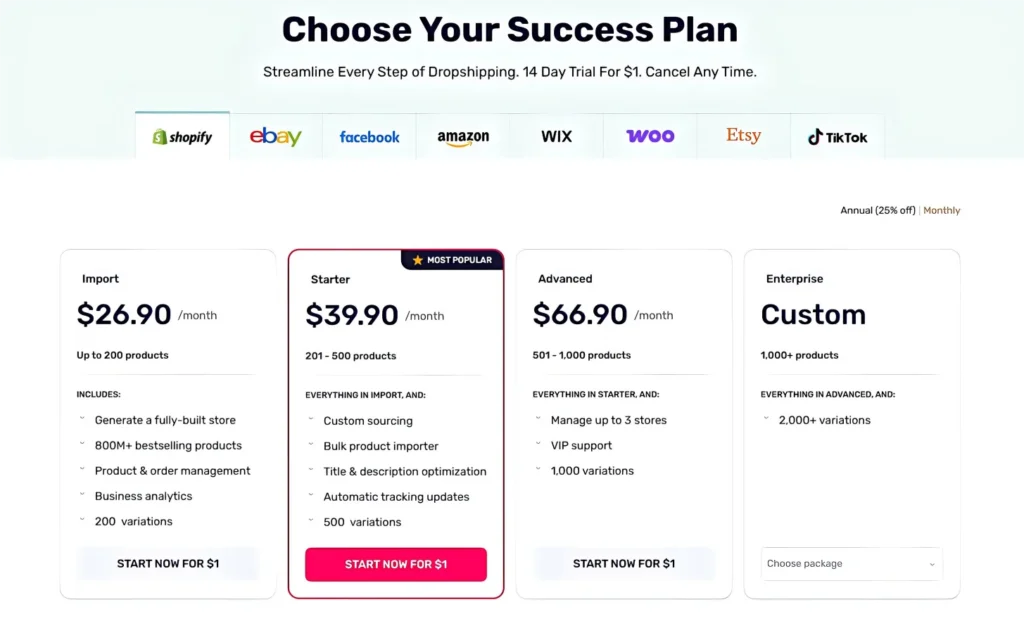
| Pricing Model | No subscription; pay per order or custom quote | Monthly Subscription (starting at $39.90 for Shopify), varying based on the specific store platform. |
| Hidden Costs | Transparent pricing (quote-based); depends on setup | Multiple Fees: AI Credits, Auto Order Credits, and Plugins (Ads Spy / Product Hub, etc.) |
| Support | Dedicated 1-on-1 manager | Ticket-based support |
| Education | Practical guidance + strategy support | Academy & tutorials |
| Best For | Scaling sellers, brand builders, margin-focused businesses | Beginners, testers, automation-first sellers |
Why AutoDS Feels Great at First
To understand why people switch, it helps to see why they start.
AutoDS gives you structure:
- Clear steps
- Built-in tools
- A fast way to launch
You don’t need to figure everything out—you just follow the flow.
For beginners, that’s exactly what you want.
Where That Same Structure Becomes a Limit
The interesting part is this:
What helps you start quickly can also slow you down later.
Here’s how that shows up in practice.
1. Margins Start to Feel Tight
Because most products come from public marketplaces, prices are already marked up.
So even when you make sales, there’s less room left for:
- Ads
- Testing
- Profit
At small scale, it’s manageable.
At larger scale, it becomes a problem.
2. Products Don’t Feel Unique
You might find something that sells…
But so can everyone else.
Same product. Same supplier. Same images.
Without differentiation, growth turns into constant chasing.
3. Costs Are Harder to See Clearly
Subscription is just the start, then over time:
- Extra tools
- Credits
- Add-ons
None of them feel big on their own – but together, they add up.
4. You Don’t Fully Control the Experience
Shipping speed, packaging, even product quality – A lot of it depends on third-party sellers you’ve never interacted with.
And when something goes wrong, you’re the one your customer contacts.
What Changes When You Switch Approach
This is where sellers begin to think differently.
Instead of asking:
“How do I automate more?”
They start asking:
“How do I improve what I’m selling?”
That’s exactly where Ship To The Moon fits in.
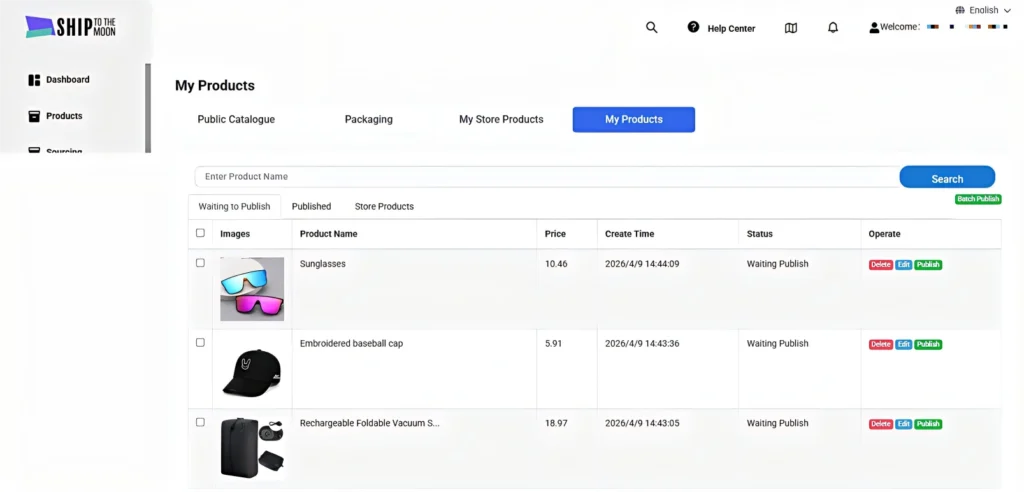
1. You Work Closer to the Source
Instead of pulling products from marketplaces, you work with suppliers more directly.
That means:
- Better pricing
- More flexibility
- More control
2. You Can Actually Shape the Product
You’re no longer locked into what already exists.
You can:
- Adjust details
- Improve packaging
- Test variations
Small changes—but they make your store feel different.
3. Shipping Becomes More Predictable
With access to US and EU warehouses, delivery times are faster and more consistent.
Customers notice that—even if they don’t say it.
4. Support Feels More Human
Instead of only using dashboards and help docs, you can talk to someone who understands what you’re trying to do.
Not just technically—but practically.
Choosing What Fits Your Stage
So which one is better?
It depends on where you are.
If your goal is still: “I just want to get started and test products”. AutoDS is a good fit.
But if your focus has shifted to: “I want better margins, better products, and something more stable”. Then it makes sense to look beyond tools alone.
A More Sustainable Way to Grow
If you’ve already:
- Made sales
- Tested products
- Run ads
Then you’re past the hardest part.
The next step isn’t more automation.
It’s better foundations.
👉 Explore how Ship To The Moon works
👉 Talk to a sourcing expert
👉 Try a product with stronger margins
No subscription. No complicated setup. Just a clearer path forward.
FAQ
-
What is a good AutoDS alternative?
It depends on your goal. If you want automation, AutoDS is still strong. If you want higher margins and branding, supply chain solutions like Ship To The Moon are better suited.
-
Is AutoDS good for beginners?
Yes. It’s designed for quick onboarding and product testing. But many sellers outgrow it once they start scaling.
-
Why do margins get tighter over time?
Because many sellers use the same suppliers and products, which increases competition and limits pricing flexibility.
-
Can I build a brand with AutoDS?
It’s possible, but difficult. You have limited control over packaging, sourcing, and differentiation.
-
Do I need a private agent to scale dropshipping?
Not at the beginning—but once you’re scaling, having control over sourcing, pricing, and fulfillment becomes critical.
-
Is Ship To The Moon beginner-friendly?
It’s more suited for sellers who already understand the basics and want to grow profitably, not just launch quickly.